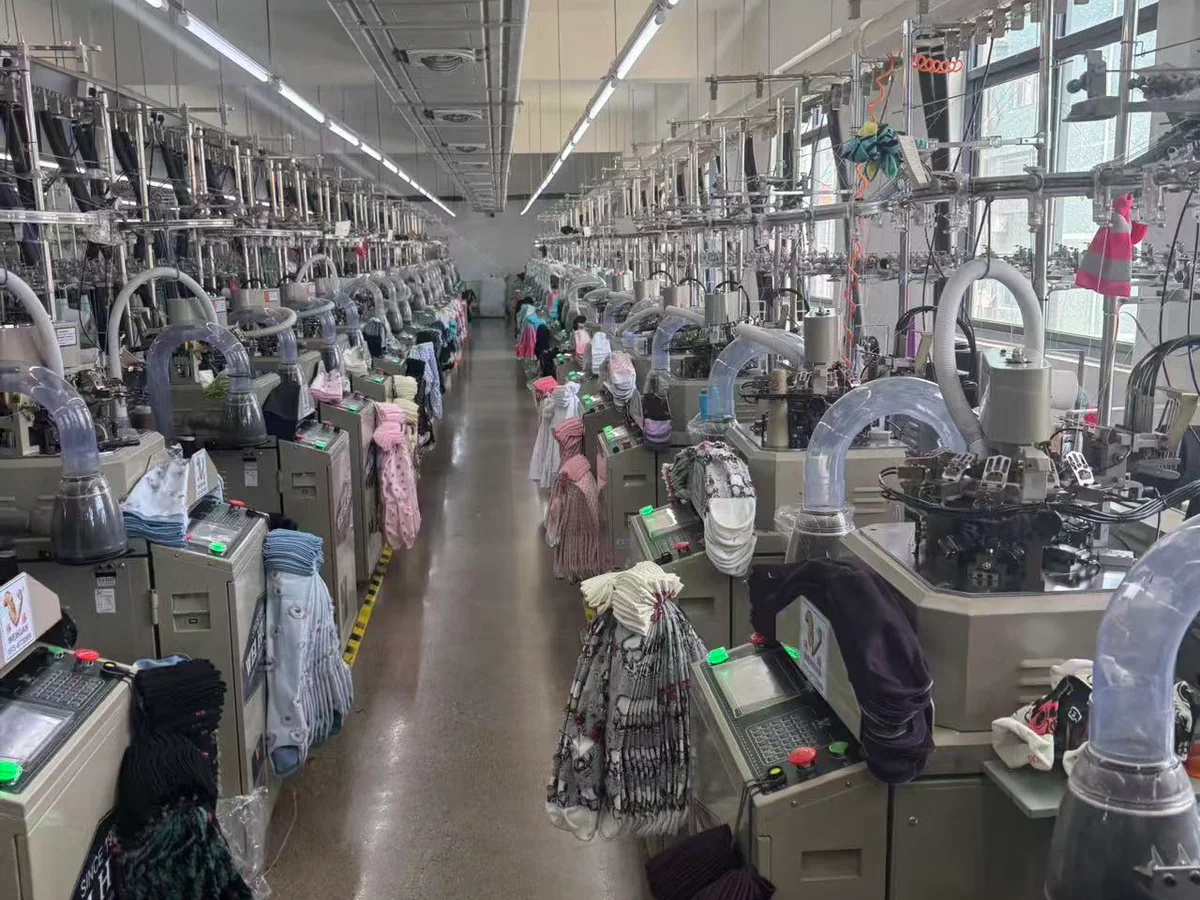
Supplier selection
How to Choose a Plus Size Socks Manufacturer
The right supplier should develop the foot, ankle, calf and cuff as connected but separate fit zones.
Read guideSourcing resources
Practical answers for wholesalers, retailers and private-label brands developing better-fitting sock programs.
22 in-depth articles
Browse by the buying question you need to answer. Every guide includes specifications, approval checks and related resources.
Supplier selection
The right supplier should develop the foot, ankle, calf and cuff as connected but separate fit zones.
Read guide
Sizing and fit
A usable wide calf size chart separates body measurements from finished sock measurements.
Read guide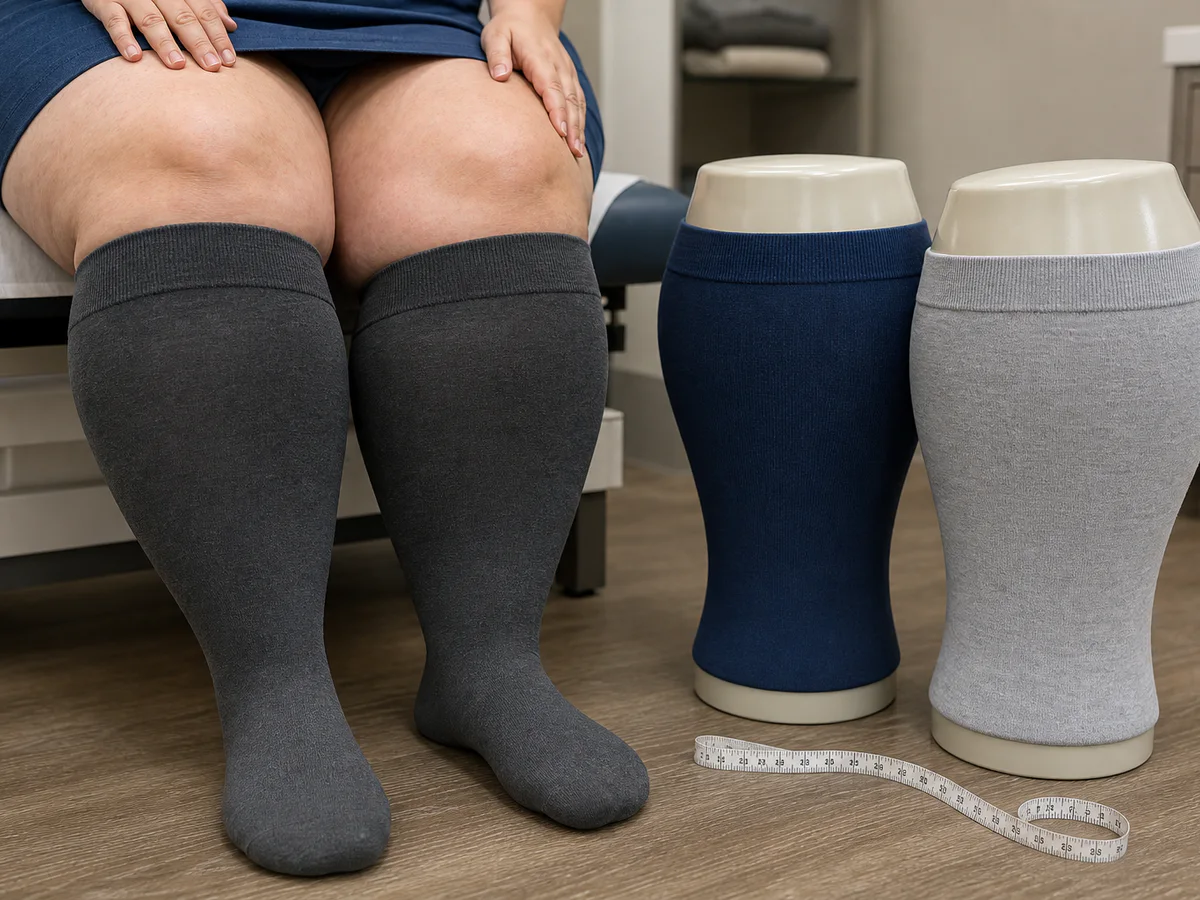
Category sourcing
Extra width is one requirement; sensitive-foot construction and clear positioning complete the product.
Read guide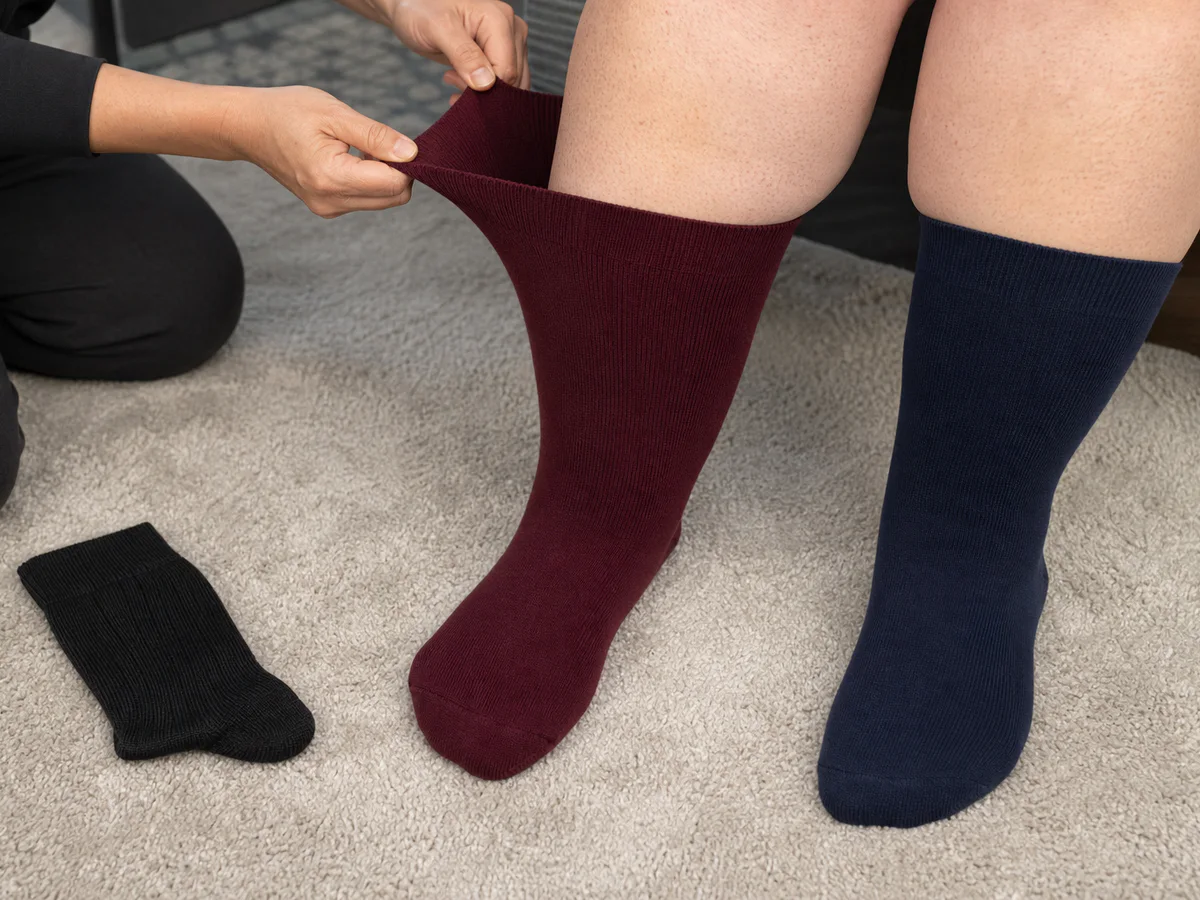
Category sourcing
A non-binding cuff must distribute hold over a wider area without turning the sock into a loose tube.
Read guide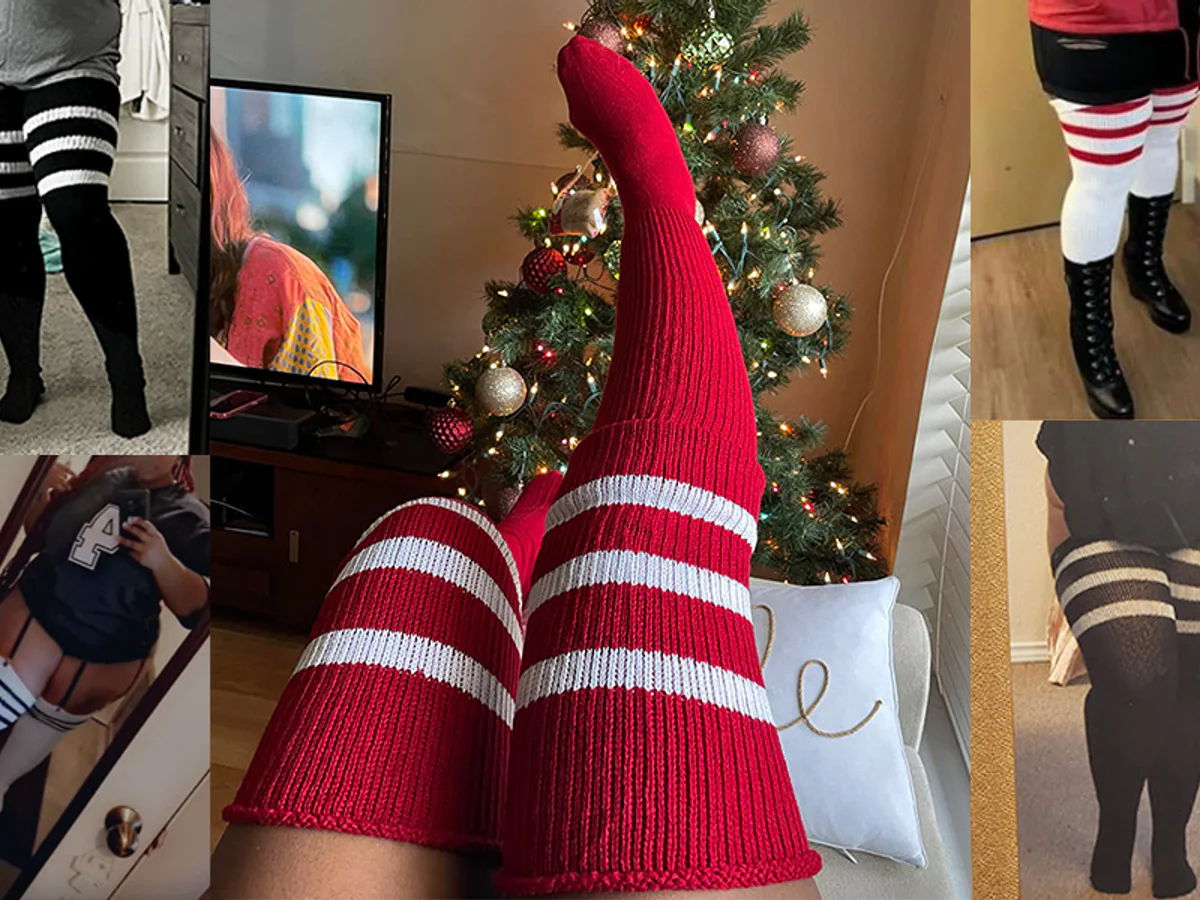
Category sourcing
Thigh circumference, calf circumference and total length must be developed as separate requirements.
Read guide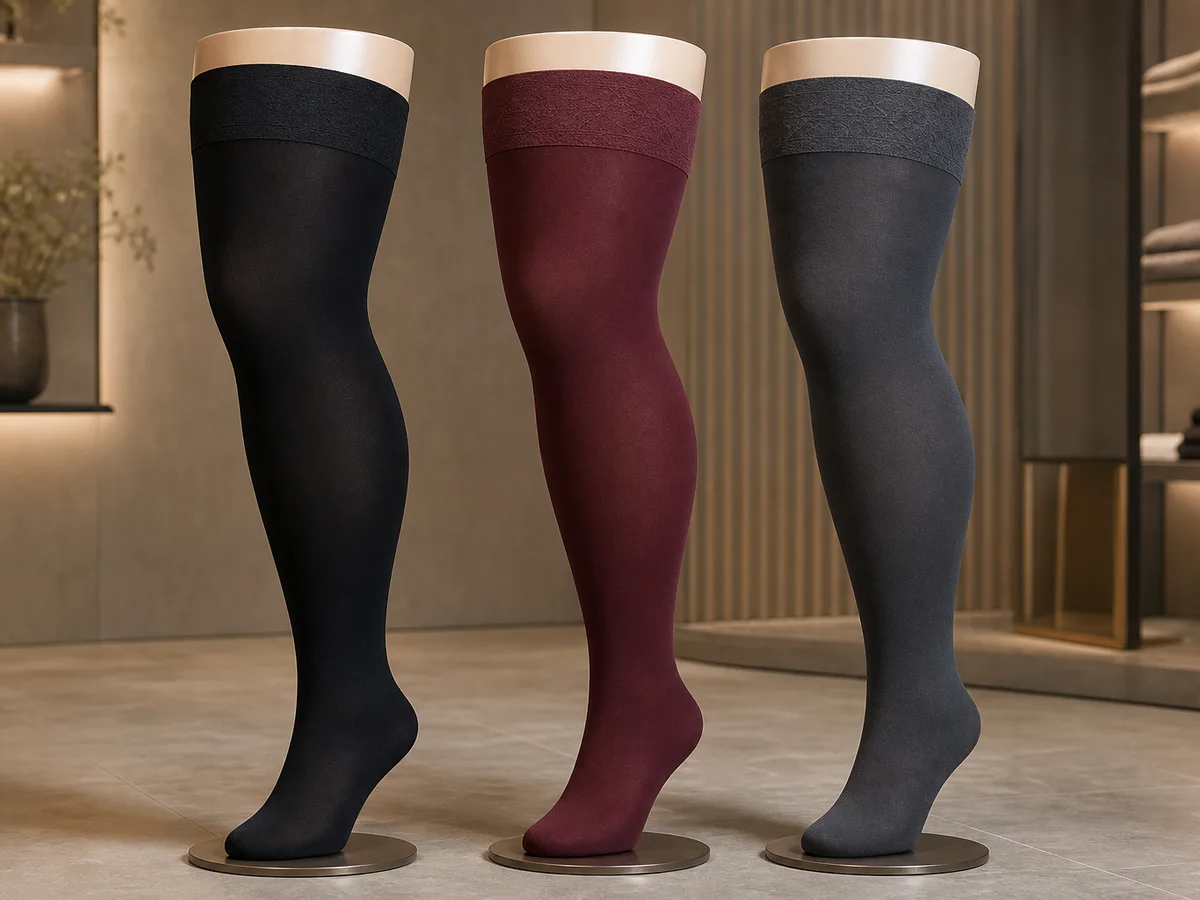
Category sourcing
Plus size hosiery needs a body-proportion system, not a standard tight with a larger waistband.
Read guide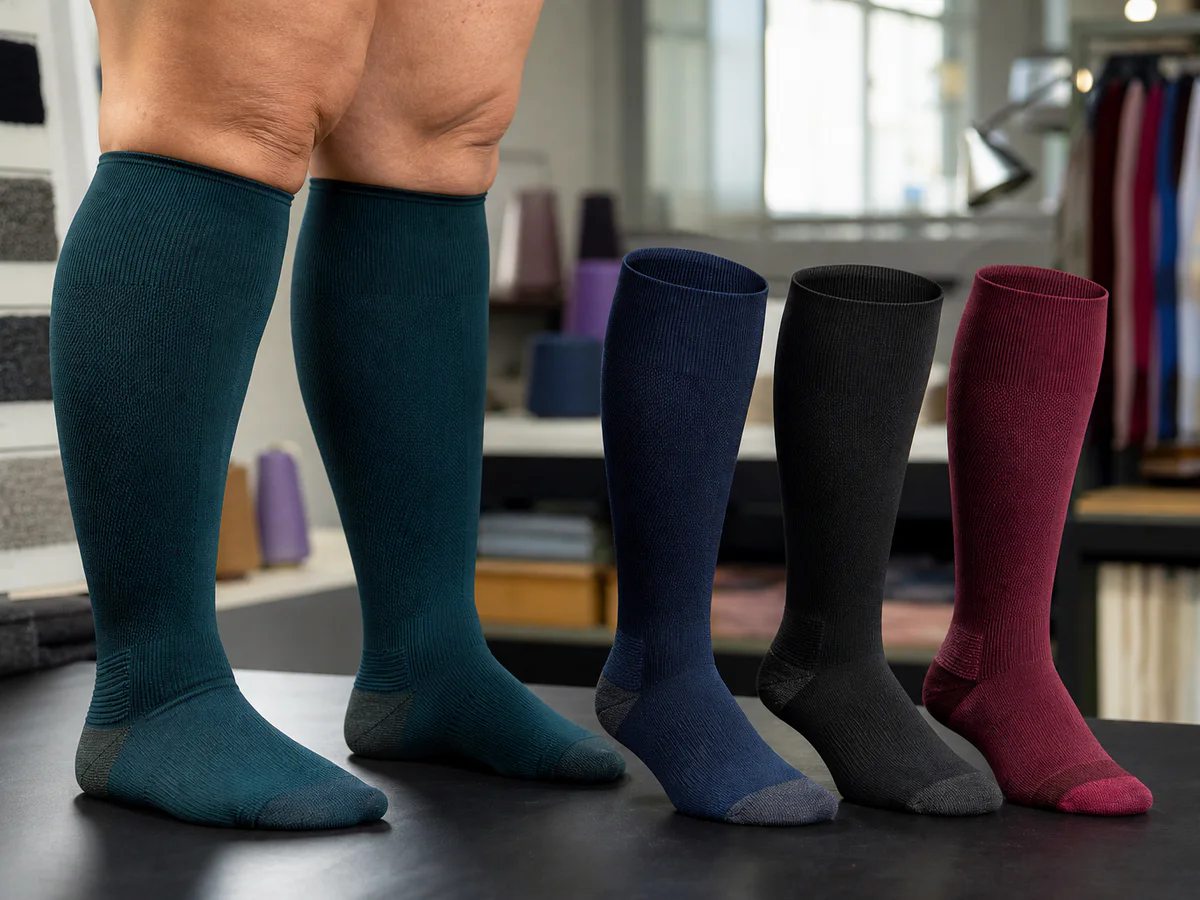
Compression sourcing
A wide calf compression sock must preserve the intended pressure profile across extended sizes.
Read guide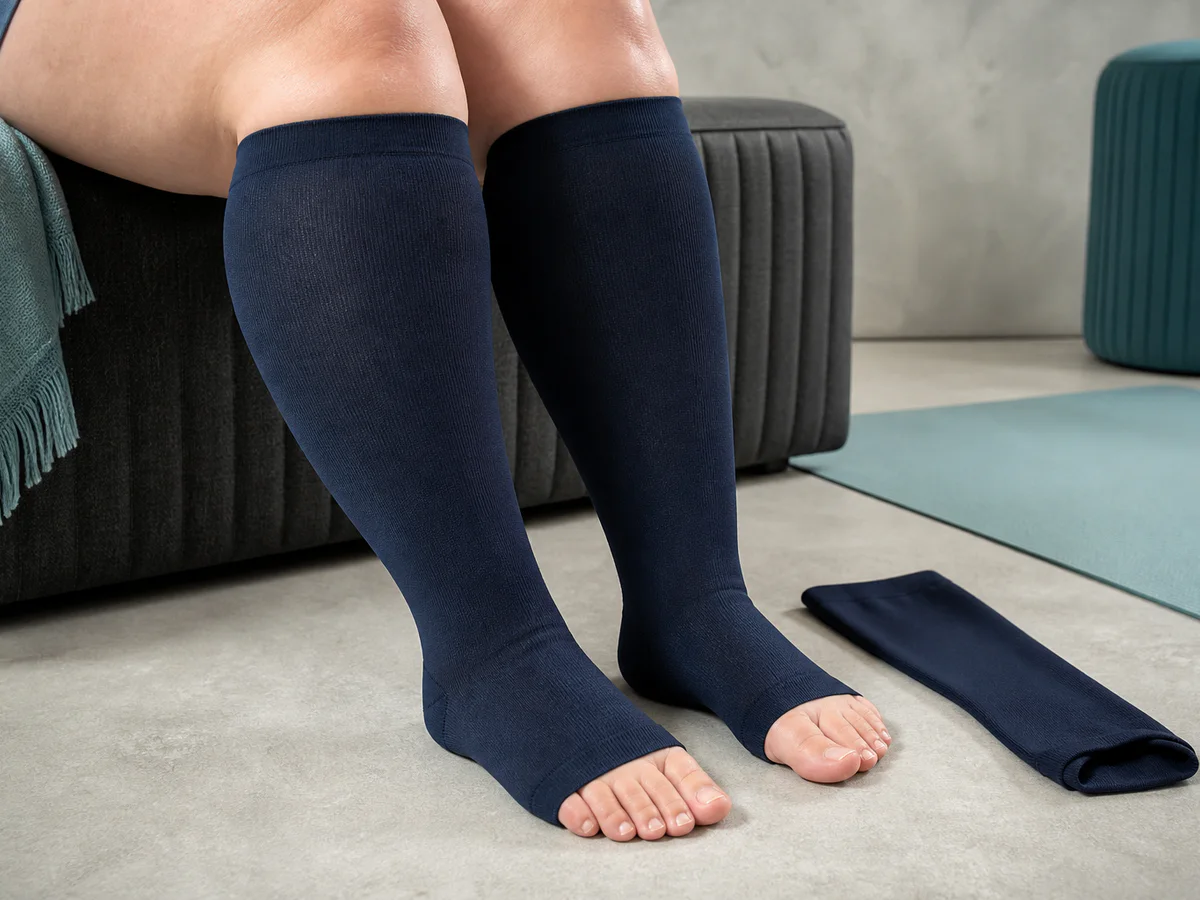
Compression sourcing
The toe opening must stay flat and comfortable while the ankle and calf maintain the intended fit.
Read guide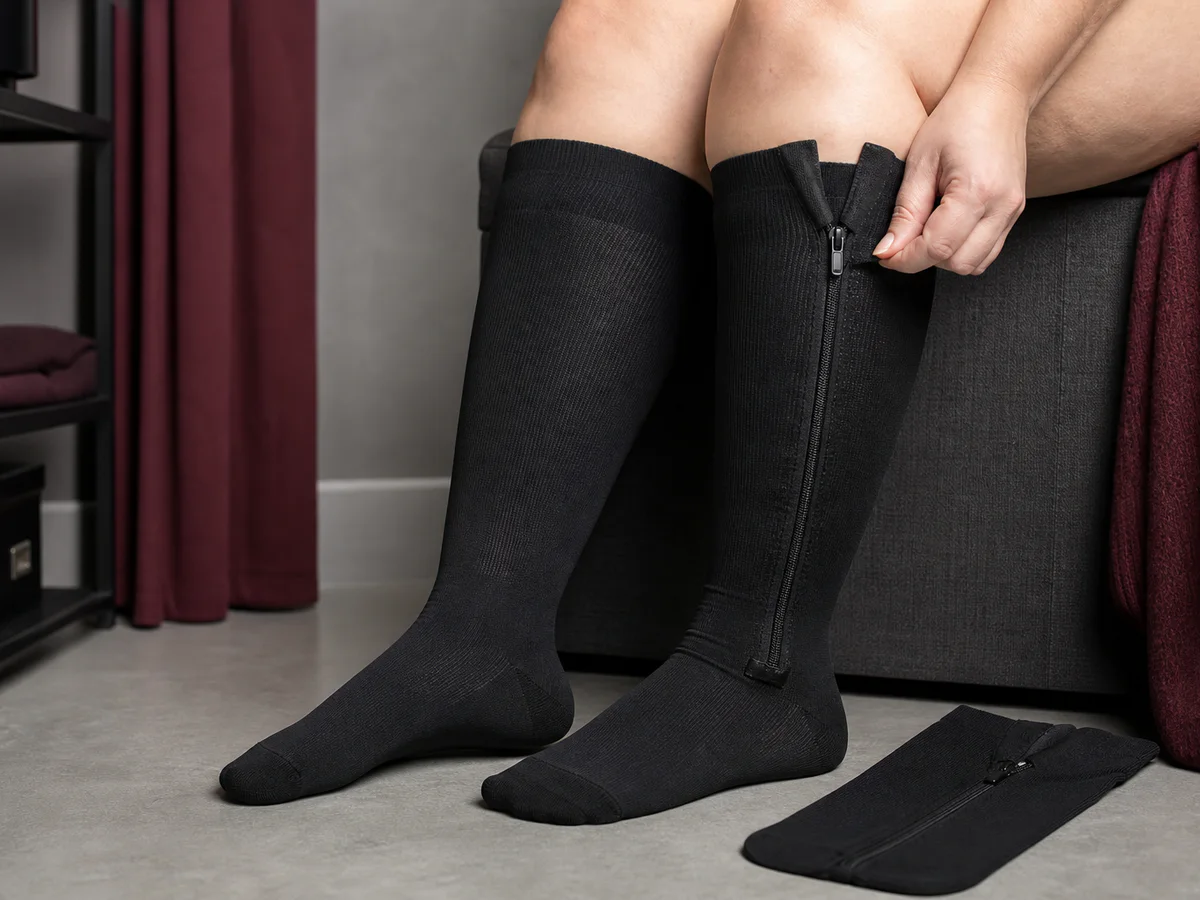
Compression sourcing
The zipper should improve access without creating a hard pressure line or changing the intended fit.
Read guide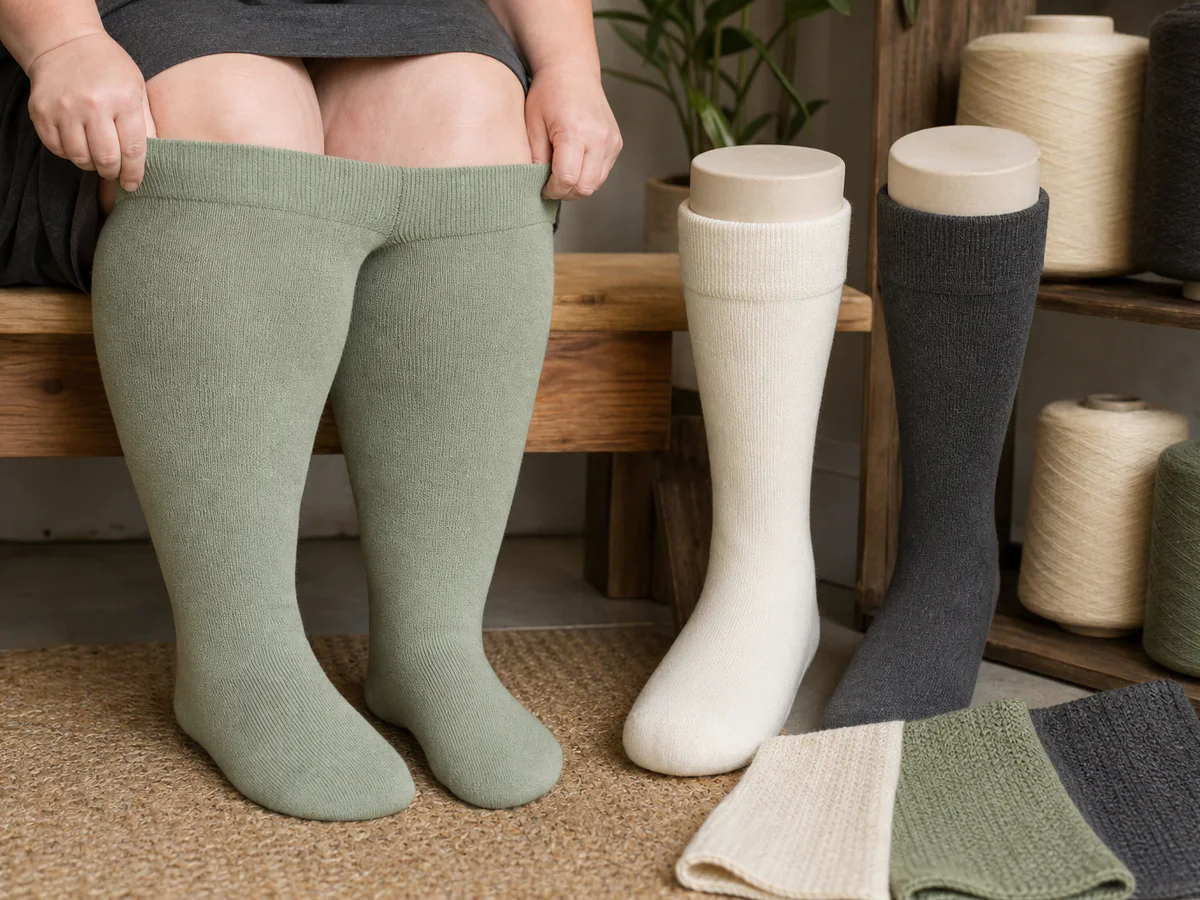
Materials
Fiber name attracts attention, but blend and construction determine how the sock performs.
Read guide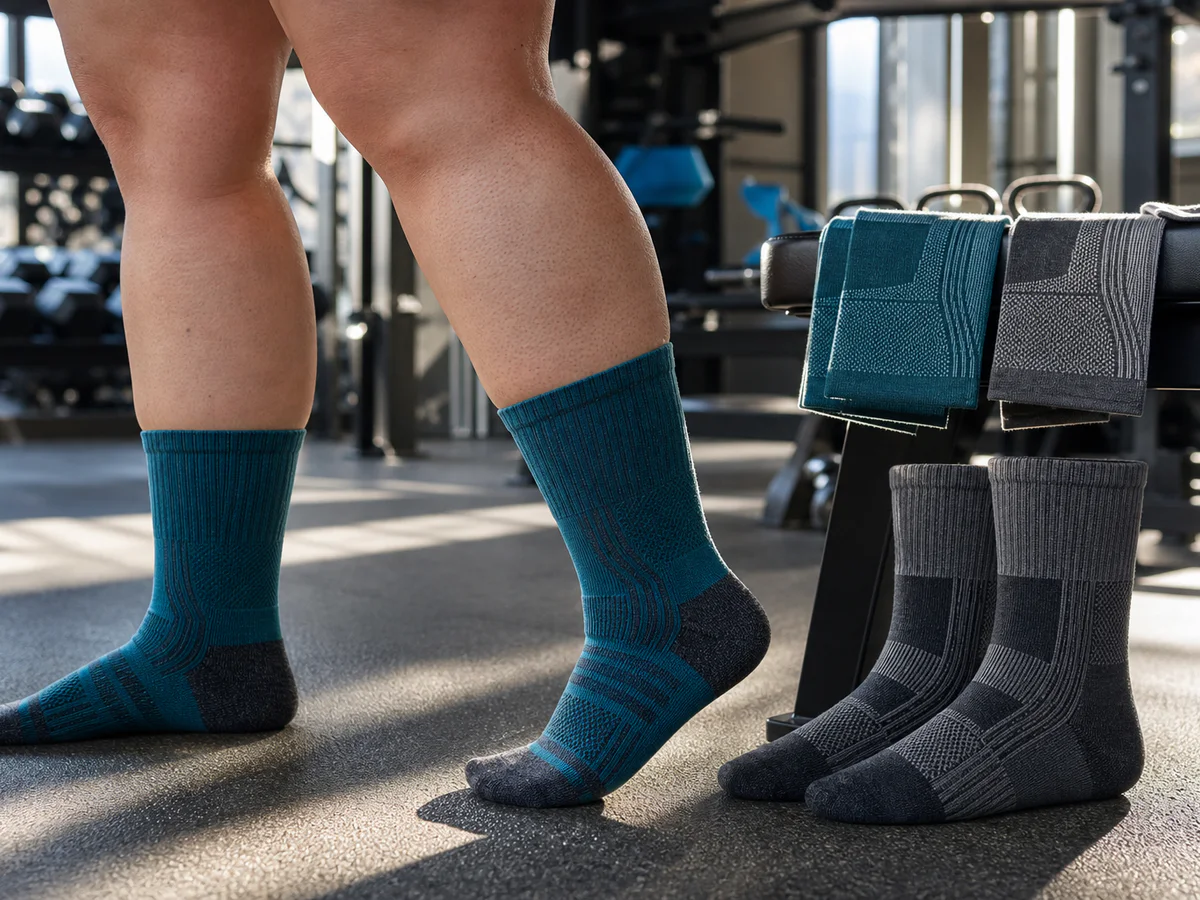
Category sourcing
Athletic socks must stay aligned during movement without turning the cuff into a tight band.
Read guide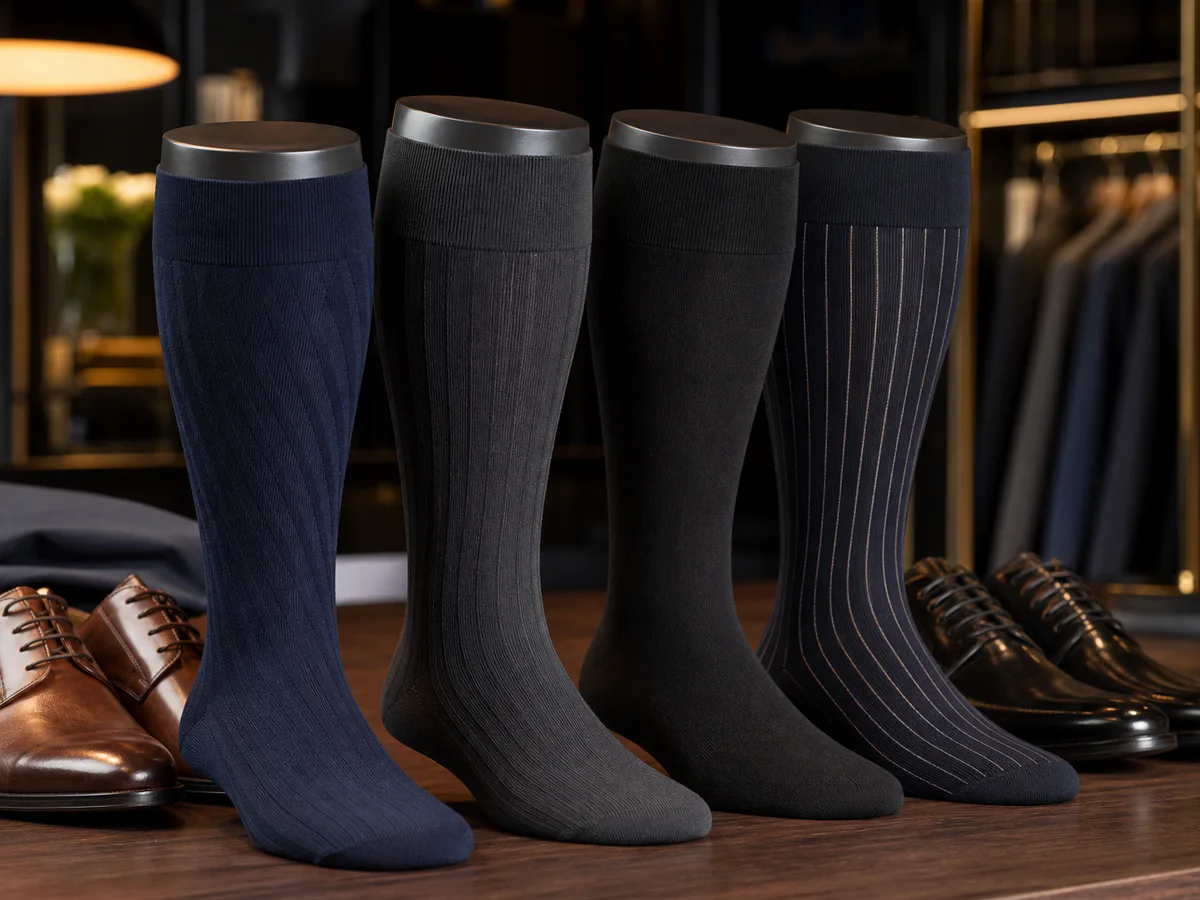
Category sourcing
Dress socks need extra room without visible bulk, sagging or a heavy medical appearance.
Read guide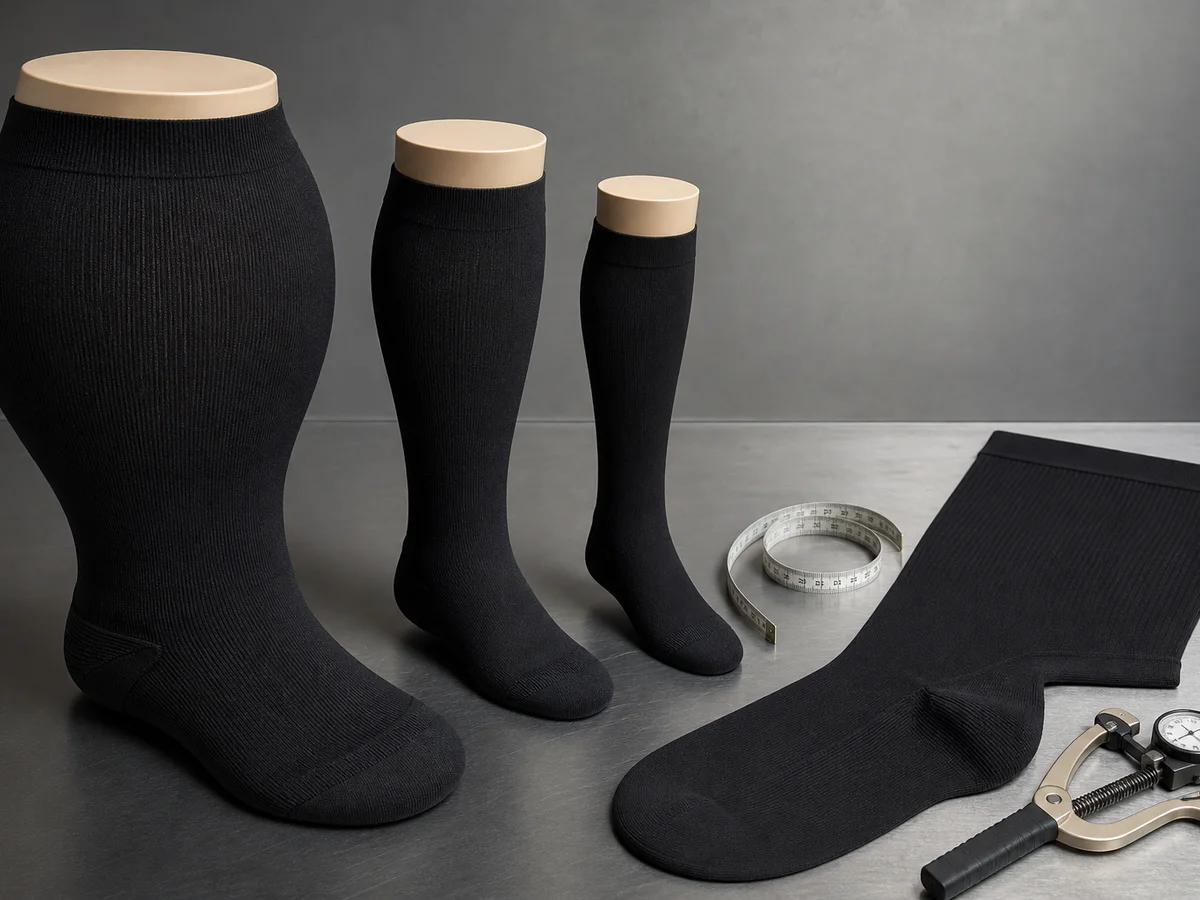
Specialty sourcing
Extreme width requires stable recovery, low-friction interiors and honest recommended fit ranges.
Read guide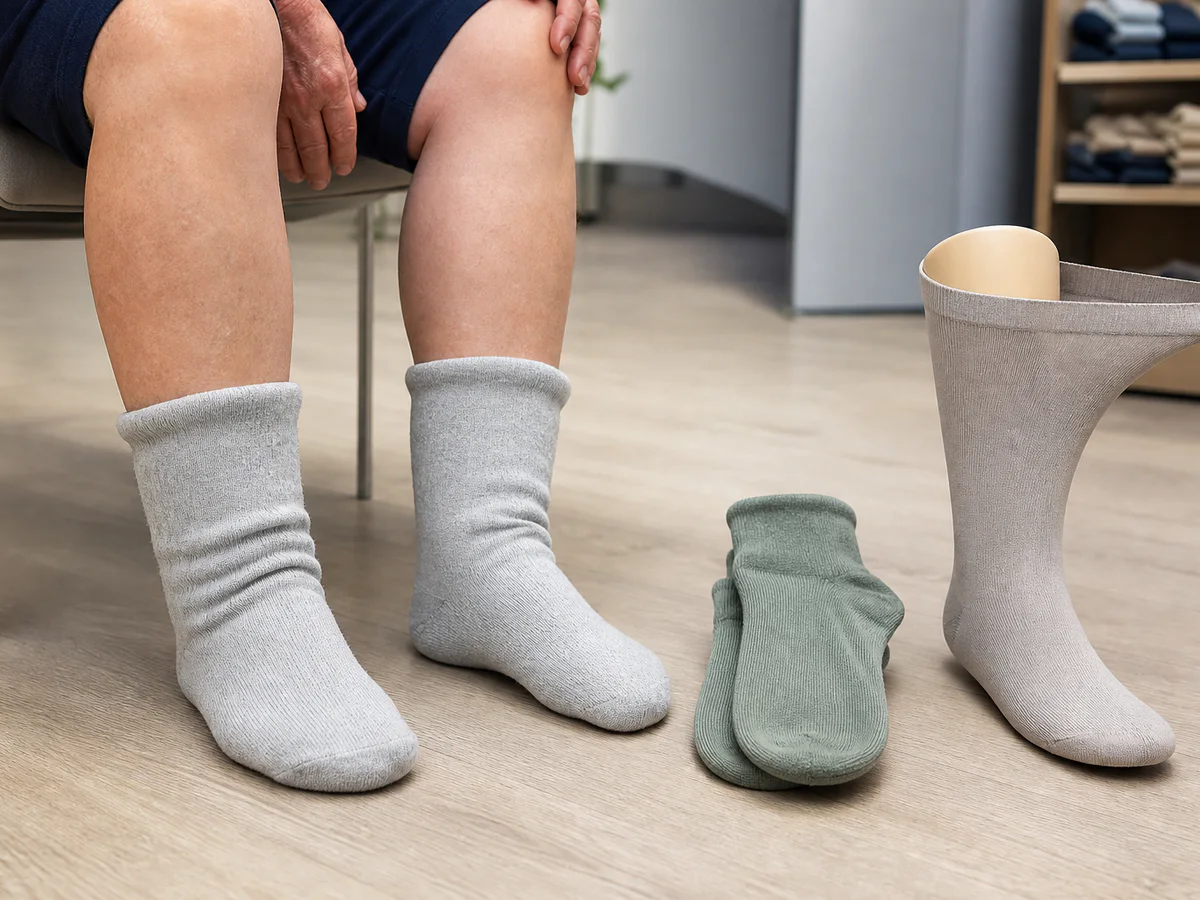
Specialty sourcing
Products for swelling must accommodate change without becoming tight early or collapsing later.
Read guide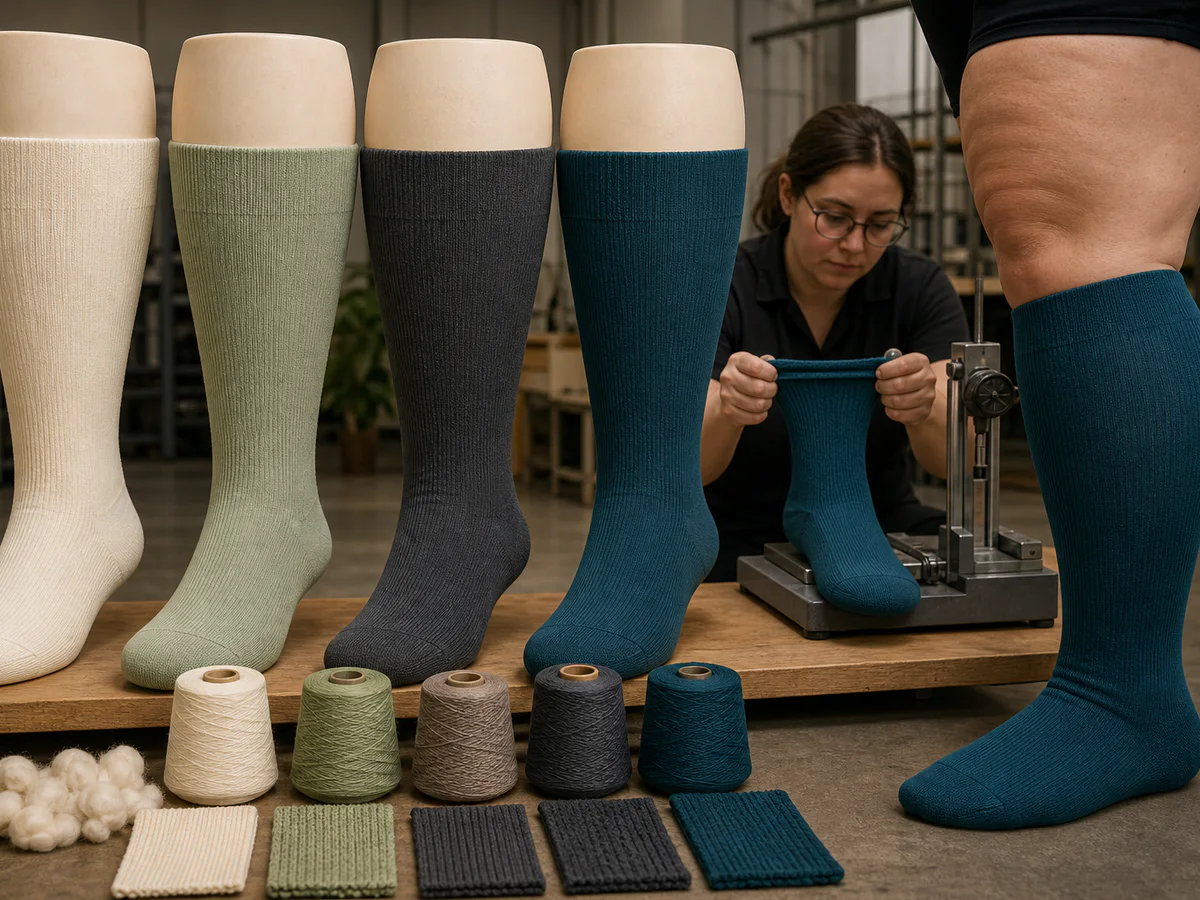
Materials
No fiber works alone; extended-size performance comes from the complete blend and knit structure.
Read guide
Quality control
Extended sizes need measurements and recovery checks that ordinary visual inspection can miss.
Read guide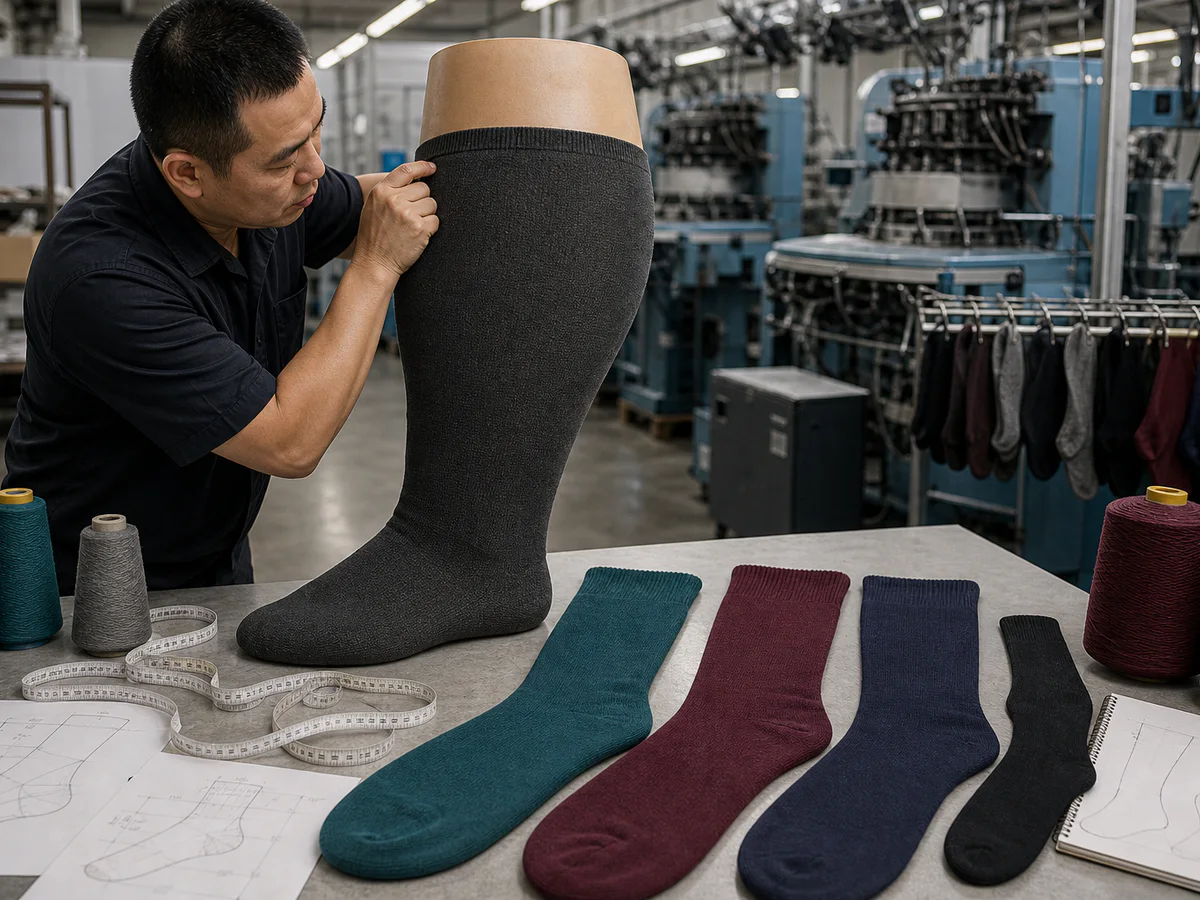
OEM and private label
The fastest development projects begin with a measurable wearer profile and one controlled reference sample.
Read guide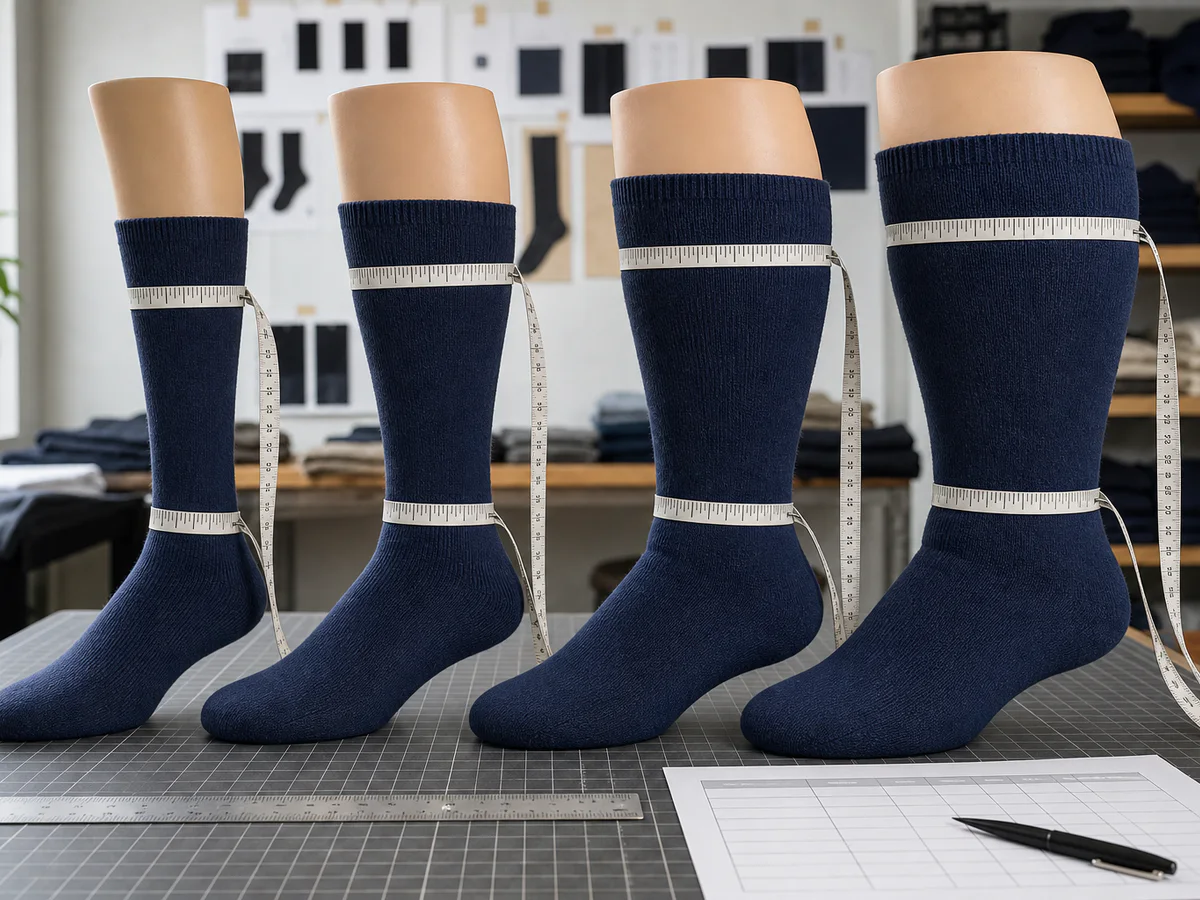
Sizing and fit
The best chart tells a shopper what to measure, which value matters most and what to do between sizes.
Read guide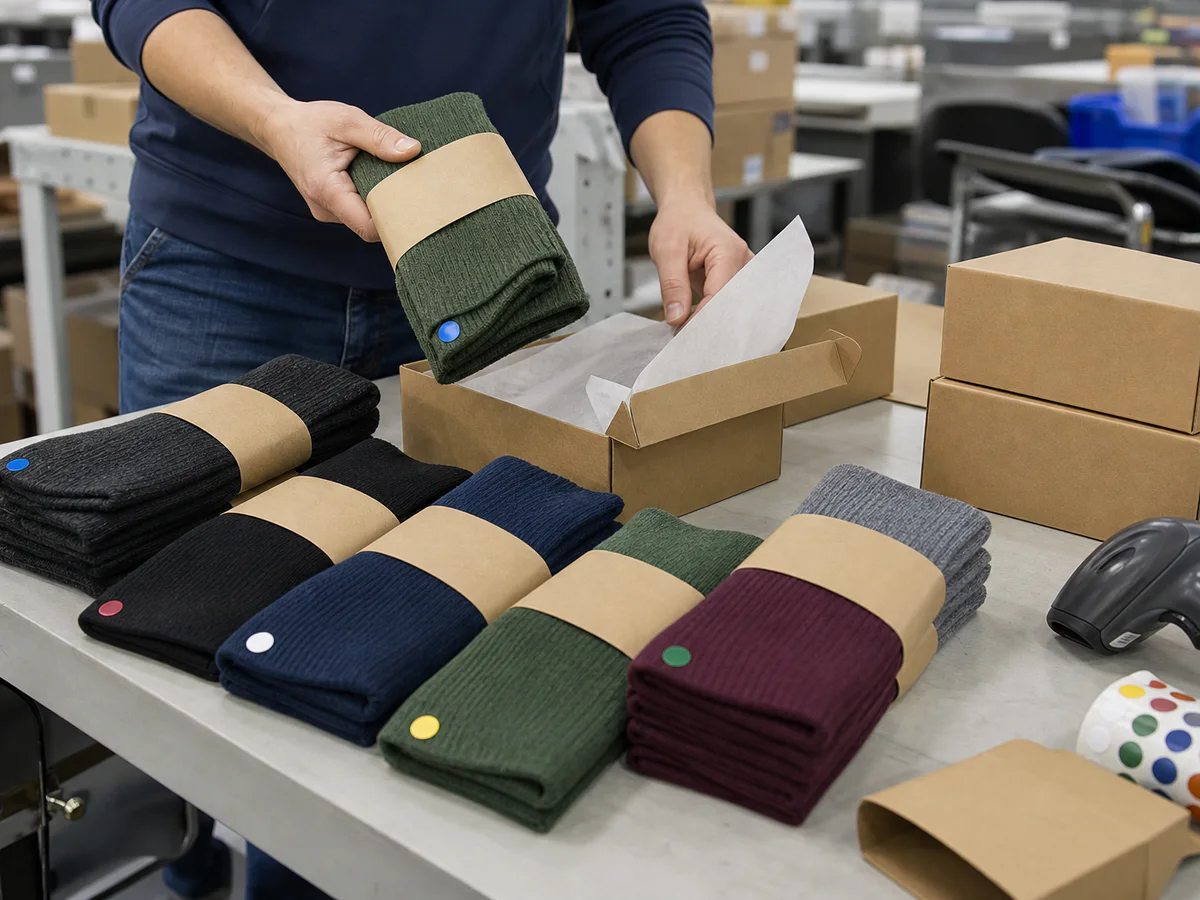
OEM and private label
Packaging should reduce fit uncertainty before it tries to sell a long list of benefits.
Read guide
Market guide
The opportunity is not one universal plus-size sock; it is a coordinated range built around different fit problems.
Read guide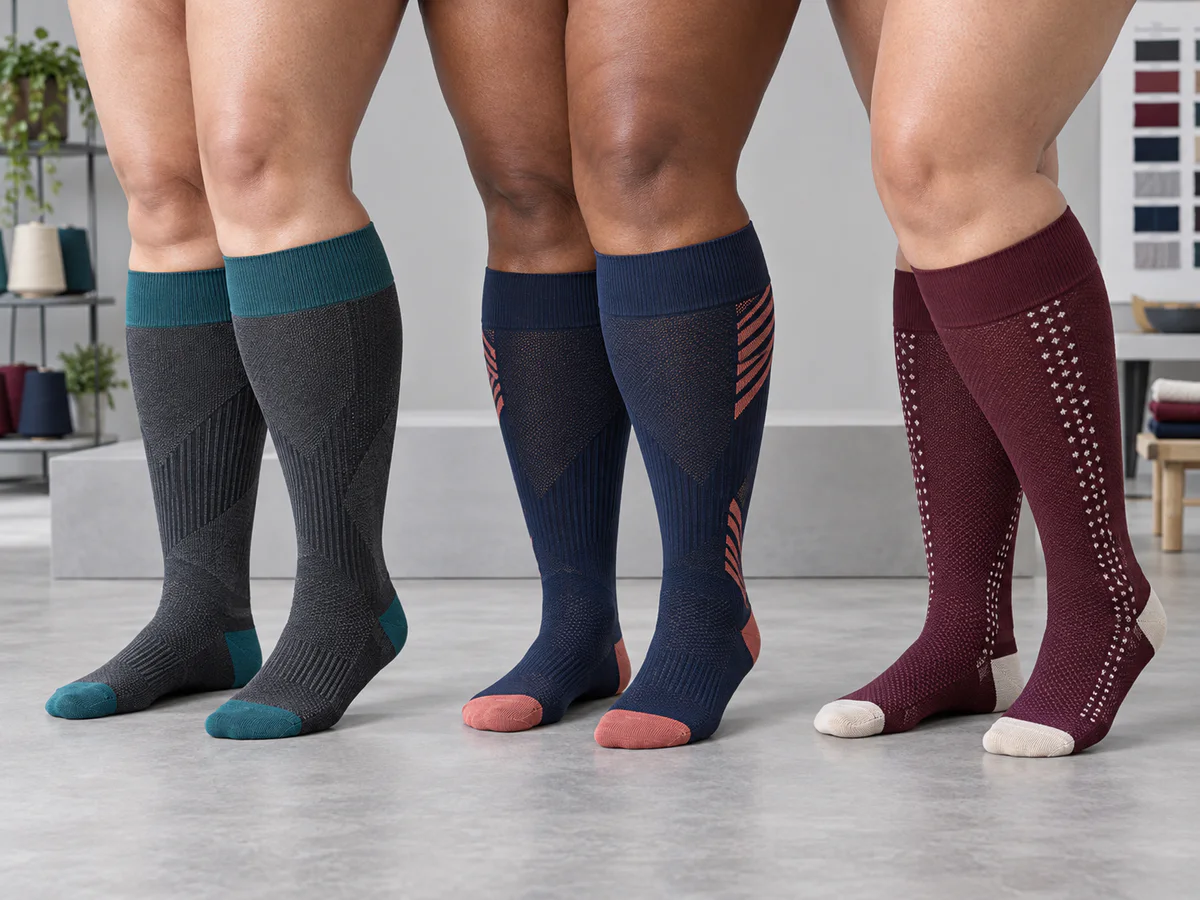
Design and color
A strong color program balances wardrobe-friendly core shades with accents that still look intentional when stretched over a wider calf.
Read guide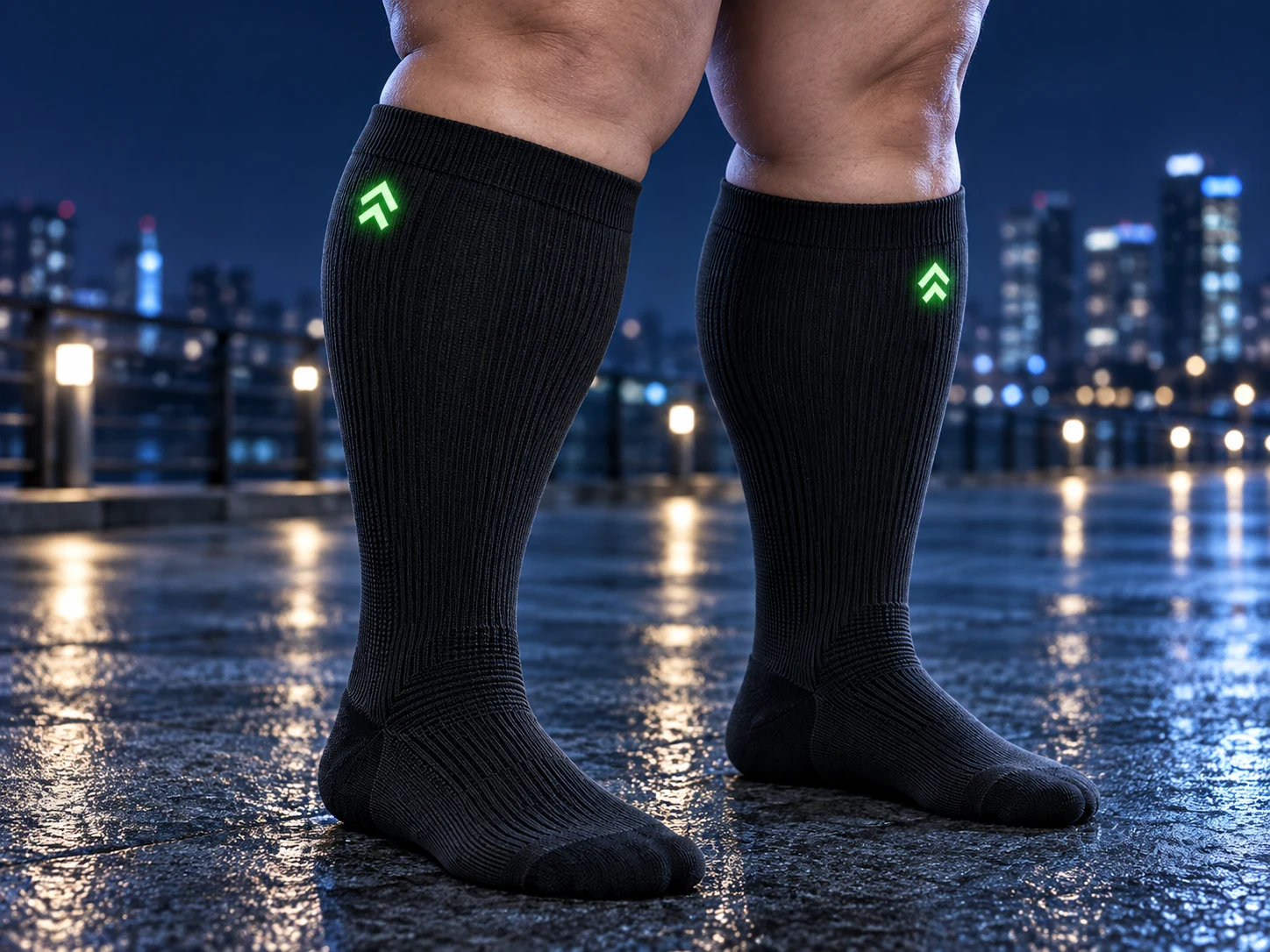
Custom branding
A luminous logo can create a distinctive private-label product, but it must remain readable across wide-calf sizes without disrupting fit or compression performance.
Read guide