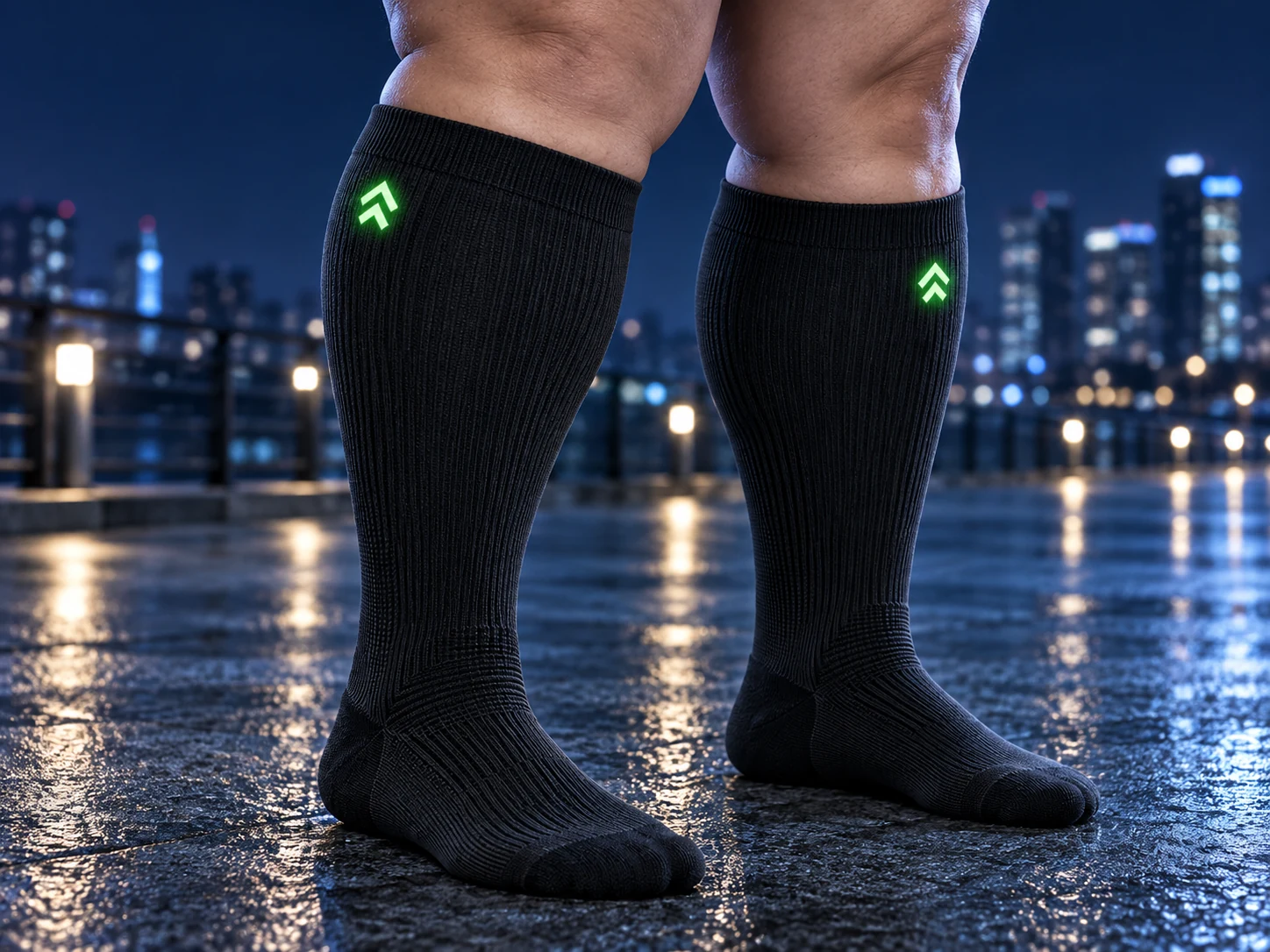
Direct answer
To develop plus size compression socks with a glow-in-the-dark logo, first choose and document the luminous method, then size and position the artwork for the minimum, middle and maximum approved calf circumference. The logo should be sampled on the final sock construction, checked for legibility when worn, and tested for glow visibility, adhesion, wash durability, stretch recovery and any effect on the approved compression profile. Reflective decoration and photoluminescent decoration are different technologies and should not be marketed as the same feature.
Key Takeaways
- Specify whether the effect is photoluminescent, reflective or another verified decoration method.
- Grade logo dimensions and placement for the full approved wide-calf size range.
- Approve the decoration on the final compression construction, not on a flat swatch alone.
- Test glow visibility, wash durability, stretch recovery and compression performance together.
- Keep claims limited to results supported by the finished product and destination-market requirements.
Choose the luminous method before designing the logo
A buyer should define what the logo is expected to do before artwork begins. Photoluminescent materials absorb light and release a visible glow in darkness. Reflective materials return light toward a source but do not continue glowing after that source is removed. These effects require different materials, test methods, photography and product wording.
The selected method also has to work with the compression sock's yarn, knit density, finishing process and washing instructions. A printed transfer, silicone decoration, specialty yarn or other application can behave differently when repeatedly stretched over a wide calf. Ask the supplier to identify the proposed method and provide a decorated sample on the intended production construction.
- Define the intended effect: glow after charging, reflected light or visible fluorescent color.
- Record the decoration material, application process and target location.
- Agree on charging conditions and the dark environment used for visual approval.
- Avoid performance language that has not been verified on the finished sock.
Design the logo for wide-calf stretch
Artwork that looks compact on a relaxed sock may become wider, lighter or uneven when worn on an extended calf. The change can be more pronounced across a plus size range because each size covers a larger circumference interval. Logo development therefore needs worn measurements rather than a single flat artwork dimension.
Place the mark where the knit stretches predictably and where it does not cross strong transition zones. Review it on target leg forms or wearers at the minimum, middle and maximum circumference for every approved size. A simple emblem with open spacing usually survives stretch better than fine lettering or a dense detailed badge.
- Specify logo width, height and position for each extended size.
- Check both legs for mirrored or consistent placement.
- Use minimum line widths that remain visible after stretch.
- Photograph the logo relaxed, worn and at maximum approved circumference.
- Confirm that the luminous area does not crack, gap or expose an unintended base color.
Protect fit and graduated compression performance
A decorative logo must remain secondary to the fit system. Plus size compression socks need enough circumference at the cuff and calf, controlled ankle shaping and a foot length that is graded independently. Adding a thick or low-stretch decoration can locally change extensibility, create a stiff patch or make the product harder to put on.
Approve the decorated version against the same dimensional and performance specification used for the base product. If the logo material, coverage or curing process changes, repeat the relevant checks. Compression levels and medical or performance claims should only be used when supported by appropriate testing and reviewed for the target market.
- Compare decorated and undecorated samples for stretch and recovery.
- Check cuff comfort and skin feel around the logo area.
- Measure the finished size after decoration and finishing.
- Verify the approved compression profile on the decorated production sample.
- Run donning and removal trials with representative wide-calf users.
Test glow visibility and wash durability
A bright first sample does not establish repeat performance. The approval plan should define how the logo is charged, how soon it is viewed in darkness and what level of visibility is acceptable. Keep the viewing distance, camera exposure and ambient light consistent so samples can be compared fairly.
Wash testing should follow the intended care label and include repeated cycles rather than one visual check. After washing, inspect glow uniformity, cracking, peeling, color change, edge lift, hand feel and the sock's dimensional recovery. Retain an approved reference sample for bulk production and future reorders.
- Document the light source, charging time and dark-viewing interval.
- Review the logo immediately after charging and again after an agreed period.
- Repeat visual and stretch checks after the specified wash cycles.
- Compare bulk samples with the approved pre-production reference.
- Confirm care instructions for both the sock and luminous decoration.
Build a production-ready B2B specification
The purchase specification should connect the artwork, size system, compression construction and quality plan. Include an artwork file, placement diagram, size-by-size logo dimensions, approved luminous material, color reference, application process, testing conditions and packaging wording. This reduces subjective approval and makes repeat orders easier to control.
For an initial private-label launch, limit the number of logo variants until the construction and luminous process are stable. Approve one base color and a controlled artwork system first, then expand colors or placements after wear and wash results meet the agreed standard.
- Final vector artwork and placement map for every size.
- Calf, ankle, foot and cuff measurements with tolerances.
- Approved luminous material and application parameters.
- Compression, wash, stretch-recovery and visual inspection requirements.
- Packaging copy that distinguishes glow-in-the-dark from reflective performance.
Buyer questions
Frequently Asked Questions
What is the best logo style for plus size glow-in-the-dark compression socks?
A simple emblem with open spacing, controlled coverage and sufficiently wide lines is usually easier to keep legible across a wide-calf size range. The final choice should be tested on the worn sock at each approved circumference.
Are reflective logos and glow-in-the-dark logos the same?
No. Reflective materials return light from an external source, while photoluminescent materials absorb energy and release a visible glow in darkness. Product descriptions should identify the actual verified technology.
Can a luminous logo change compression performance?
It can if the decoration is thick, stiff, covers too much area or changes the finishing process. Test the decorated production construction for dimensions, stretch recovery, fit and the approved compression profile.
What should a buyer approve before bulk production?
Approve worn logo appearance across sizes, glow conditions, decorated fit, compression verification, repeated-wash results, care instructions, packaging copy and a retained pre-production sample.