Direct answer
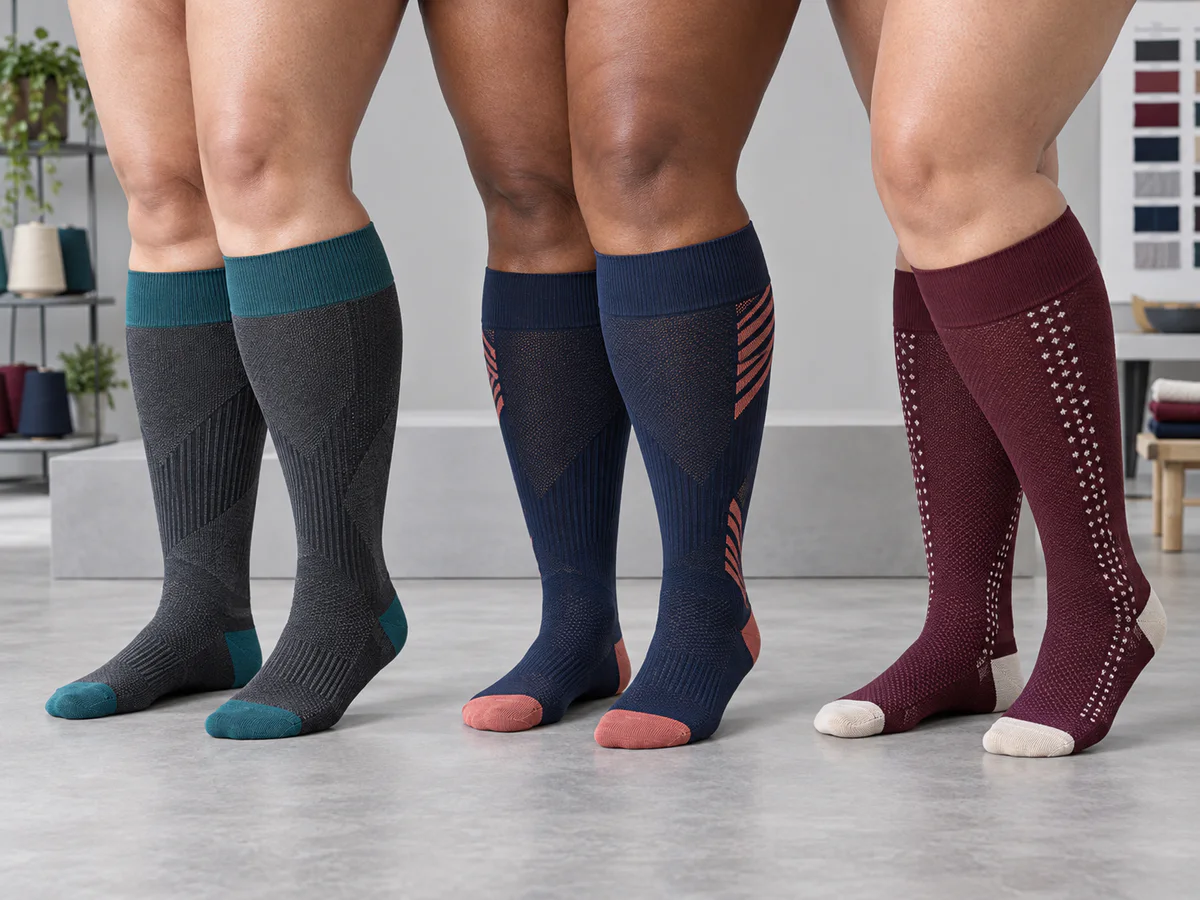
A practical plus size compression sock color program starts with black, navy and charcoal as repeatable core colors, then adds a small group of channel-specific accents. Patterns, color blocks and logos must be reviewed at the minimum, middle and maximum approved calf circumference because artwork can widen, lighten or expose base yarn when stretched. Approve every color on the final yarn, construction and size rather than on a flat swatch alone.
Key Takeaways
- Build a core, support and seasonal color architecture before sampling.
- Evaluate patterns at the full approved calf-stretch range.
- Use accents for navigation without relying on color alone.
- Approve color on the final yarn, knit structure and size.
- Keep shade standards and production samples for repeat orders.
Build the color architecture before choosing shades
Start with the customer, sales channel and wearing occasion. A workwear or travel program usually needs quiet colors that coordinate with uniforms and everyday clothing. A sport or lifestyle range can carry stronger contrast, while a pharmacy-oriented assortment may need especially clear size and product identification.
The first collection should feel coordinated rather than crowded. A useful structure separates dependable core colors from supporting shades and short-run accents. This gives buyers enough choice while keeping yarn purchasing, photography, inventory and repeat production manageable.
- Core colors: black, deep navy and charcoal for broad wardrobe use.
- Supporting colors: burgundy, deep teal, dark brown or olive for controlled variety.
- Seasonal accents: coral, berry, cobalt or other channel-led colors in smaller quantities.
- Skin-tone programs: develop several measured undertones instead of treating one beige as universal.
- Multipacks: combine colors with similar care and colorfastness behavior.
Design color and pattern for a wider calf
A pattern that looks balanced on a flat sock can change substantially on a wide calf. Motifs become wider, negative space opens, dark ground yarn may show through and narrow lines can lose their intended rhythm. The artwork therefore has to be judged as part of the fit system, not as a separate graphic file.
Review the design on target leg forms or wearers at the minimum, middle and maximum circumference for each size. Place the widest visual area where the knit can stretch cleanly, and keep important marks away from zones where construction or pressure transitions create extra distortion.
- Scale motifs for the finished worn circumference, not only the relaxed sock width.
- Check whether light base yarn becomes visible between dark stitches at maximum stretch.
- Keep logos legible without turning the widest calf area into a large advertising panel.
- Inspect pattern alignment on both legs and across every extended size.
- Photograph the approved design worn, relaxed and after washing.
Approve color on the production construction
A digital color value or screen image is not a production standard. Approve a physical yarn, lab dip or knitted sample under agreed lighting, then confirm the shade on the actual compression construction. Yarn composition, knit density, elastomer coverage and finishing can all change the apparent depth and surface of a color.
Color approval should sit beside fit and pressure verification, not replace them. If a new dye lot, yarn supplier or finishing process changes stretch or recovery, repeat the relevant performance checks. Archive the approved sample and shade reference so a repeat order can be compared with evidence rather than memory.
- Name the physical color standard and acceptable tolerance on the specification.
- Review shade under daylight-equivalent and expected retail lighting.
- Check wash color change, crocking and transfer between contrast areas.
- Confirm that each colored size still meets dimensional and pressure requirements.
- Retain pre-production and bulk samples from every approved color.
Buyer questions
Frequently Asked Questions
What colors should a plus size compression sock range launch with?
For most B2B programs, begin with black, navy and charcoal, then add one or two colors chosen for the target channel. The right launch palette depends on uniforms, wardrobe use, customer demographics and order volume.
Can the same pattern file be used for every wide calf size?
Not automatically. The worn circumference changes pattern scale and spacing, so artwork should be checked and, when necessary, regraded for each extended size.
Does changing the color affect compression performance?
Color alone does not define compression, but a change in yarn, dyeing, finishing or knit behavior can affect stretch and recovery. Verify the final colored construction against the approved dimensional and pressure specification.