Direct answer
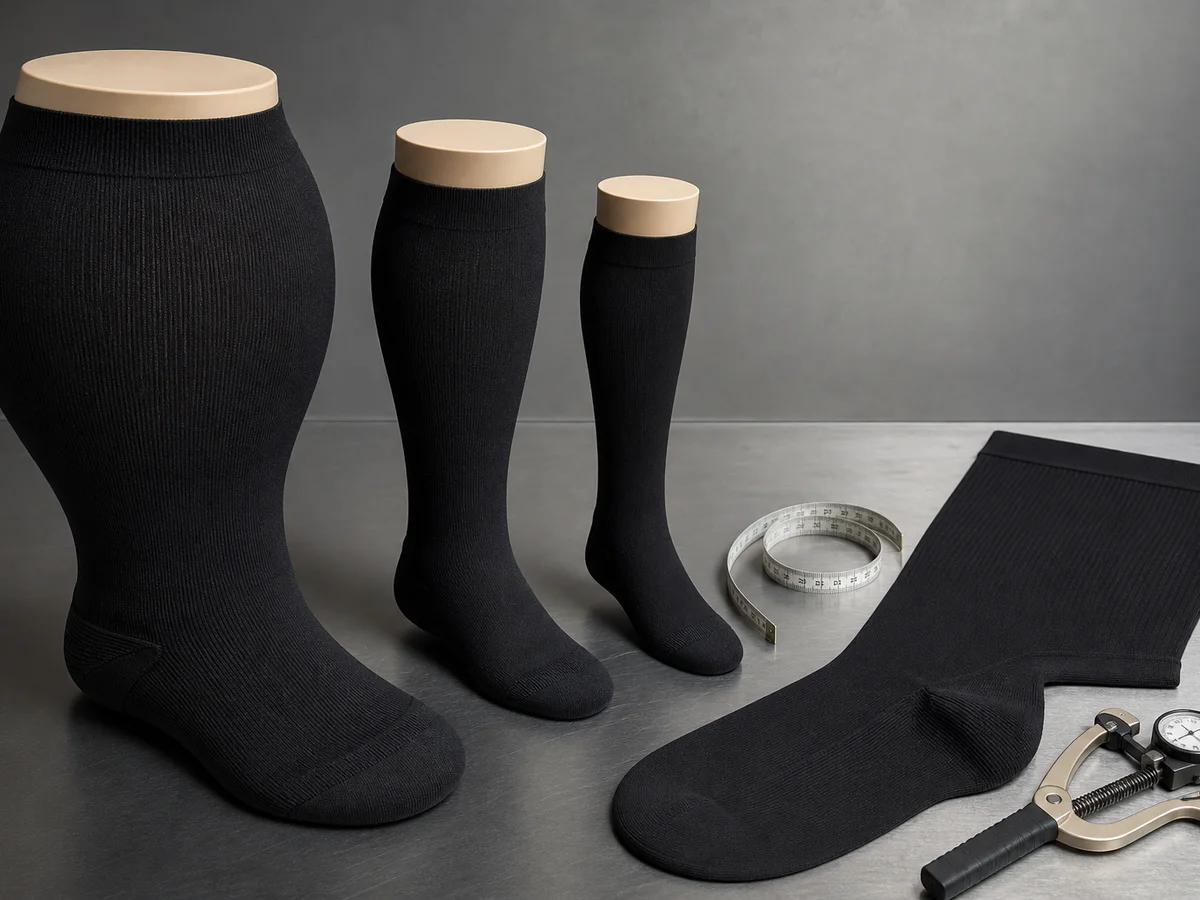
Bariatric socks should be specified for the actual foot, ankle and calf ranges, intended swelling variation, sock height and use over bare skin, bandages or braces. Buyers should prioritize easy access, broad hold, smooth interiors and recovery after extended stretch.
Key Takeaways
- Define the real upper circumference range.
- Separate bare-leg, bandage and brace use cases.
- Avoid narrow elastic lines.
- Check recovery after prolonged extension.
- Use simple donning and care information.
Define extreme width with measurements
Bariatric is not a standardized sock size. A buyer should state the foot width, ankle and calf ranges and whether the product may be worn over dressings, braces or casts.
The recommended range should reflect comfortable wear and recovery, not only the largest form the sock can be forced over.
Make access part of the design
Users may have limited reach, hand strength or mobility. A generous opening and controlled stretch through the heel can make a meaningful difference during donning.
At the same time, excess looseness can allow twisting and folds. The sample should be evaluated on the intended leg profile and use condition.
Review skin-facing construction
Inspect toe closure, interior floats, terry loops and elastic lines. The surface should match the sensitivity and protection requirements of the program.
If the sock is intended over a bandage or brace, confirm that seams and thickness do not create concentrated bulk.
- Smooth toe area.
- Broad top construction.
- Low-bulk heel transition.
- Appropriate cushioning.
- Clear inside and outside identification.
Test extended stretch and laundering
An extreme-width sock may remain stretched for many hours. Check whether it returns to shape, whether yarns become transparent and whether the cuff loses control.
Repeat the fit check after the printed care cycle. Bulk inspection should include measurements and visual checks for uneven elastic distribution.
Buyer questions
Frequently Asked Questions
What makes a sock bariatric?
The term generally refers to extreme-width fit, but buyers should define exact foot, ankle and calf measurements.
Can bariatric socks be worn over bandages?
Some can, but this use should be specified and tested because bandages change circumference and surface friction.
Is maximum stretch the same as recommended fit?
No. Recommended fit should reflect comfort, appearance and recovery during realistic wear.