Direct answer
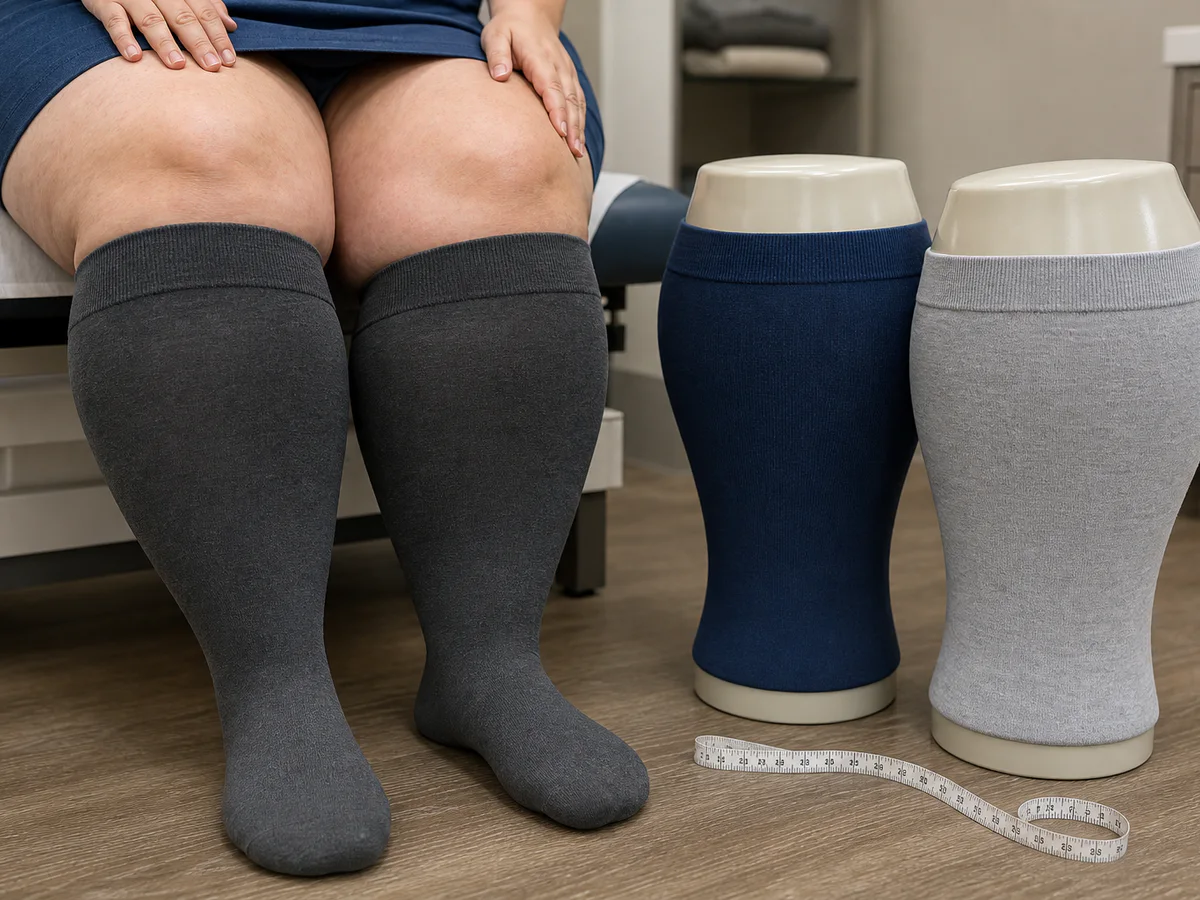
Wholesale extra wide diabetic socks should be sourced by evaluating cuff comfort, smooth toe construction, interior friction, moisture handling, cushioning, fit over swelling and wash recovery. Packaging should avoid medical treatment claims unless they are supported and permitted in the destination market.
Key Takeaways
- Non-binding should still stay in place.
- Review the complete interior, not only the cuff.
- Match cushioning and thickness to the sales channel.
- Test fit over changing ankle and calf circumferences.
- Use careful, supportable packaging language.
Define the intended comfort problem
The phrase diabetic sock is used broadly in retail. For B2B development, buyers should translate that label into specific construction requirements. The project may focus on a soft top, a smooth toe, extra room for swelling, moisture management or added underfoot cushioning.
Not every end user needs the same combination. A lightweight dress sock and a cushioned home sock can both serve sensitive feet, but they require different yarns, thickness and footwear clearance.
Balance a gentle cuff with secure wear
A cuff that leaves a deep narrow mark is a common source of dissatisfaction. Removing too much holding power creates a second problem: the sock slides, twists or gathers inside the shoe.
The solution is usually a broader holding zone and controlled stretch through the leg rather than a single tight elastic line. Wear tests should include sitting, walking and normal swelling changes over several hours.
- Measure the cuff at rest and at practical stretch.
- Check pressure marks after the intended wear period.
- Inspect whether the sock rotates or slips.
- Repeat the test after laundering.
Inspect toe, sole and interior details
Toe comfort depends on seam placement, seam bulk and finishing consistency. A product described as seamless may still contain a linking area, so the buyer should inspect the inside by hand and on a wearer.
Cushioning should be even and appropriate for the intended shoe. Heavy terry can improve softness but may make footwear tight and increase heat. Lightweight constructions require careful abrasion testing in high-wear areas.
Keep claims specific and responsible
Private-label packaging can describe non-binding construction, smooth toe design, cushioning, breathability and intended comfort. Claims about treating diabetes, healing wounds or improving circulation require a different level of evidence and regulatory review.
Use a product name that buyers and consumers understand, then support it with measurable features. A precise specification is more credible than a long list of unverified health promises.
Buyer questions
Frequently Asked Questions
Are diabetic socks the same as compression socks?
No. Non-binding diabetic-style socks are generally designed for gentle comfort, while compression socks apply controlled pressure and require separate sizing and verification.
Can extra wide diabetic socks have cushioning?
Yes. Cushioning can be added by zone, but thickness should be checked inside the intended footwear.
What should be tested after washing?
Check shrinkage, cuff recovery, toe shape, surface pilling and whether the sock still stays in place.