Direct answer
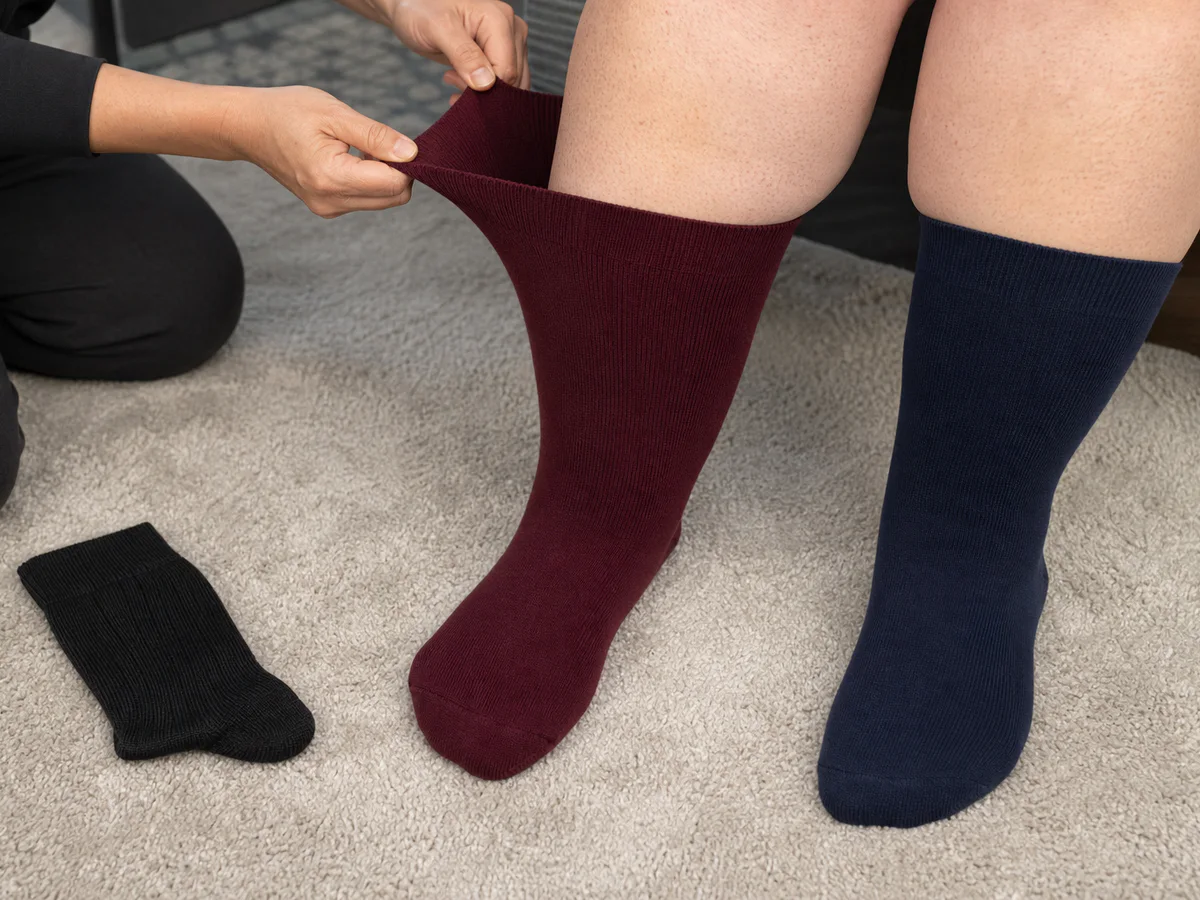
Wholesale non-binding socks should be specified with a target ankle and calf range, broad comfort-top construction, stay-up requirement, smooth interior, material blend and post-wash recovery. Non-binding describes cuff behavior; it does not mean the sock should be shapeless or fall down.
Key Takeaways
- Define non-binding as a measurable performance goal.
- Test both cuff marks and downward movement.
- Keep ankle shaping to reduce bunching.
- Select yarn by climate and footwear.
- Confirm recovery after repeated wash cycles.
Translate non-binding into a product brief
Non-binding is a consumer benefit, not a complete technical specification. A buyer should state the intended circumference range, sock height, desired hold and acceptable appearance after a full day of wear.
The factory can then select a comfort-top structure, elastic level and leg construction. Without a target range, one sample may feel soft on a narrow leg and restrictive on the actual customer.
Prevent the two opposite failures
The first failure is a cuff that digs in, rolls or creates a narrow line. The second is a cuff that loses recovery and lets the sock collapse around the ankle.
A strong design spreads holding force over more fabric and maintains shape through the ankle. The result should feel gentle without moving excessively inside the shoe.
- Use a wider comfort band.
- Grade ankle and calf zones independently.
- Test on the upper end of the stated fit range.
- Check performance before and after laundering.
Choose materials for the actual channel
Cotton-rich blends offer a familiar hand feel. Bamboo viscose blends can feel smooth and soft. Wool blends suit cold-weather programs, while synthetic performance yarns can support faster moisture movement and abrasion resistance.
No single fiber solves every requirement. The blend, yarn size, knit density and finishing method work together. Buyers should compare complete samples rather than selecting by fiber name alone.
Prepare consumer information that reduces returns
Packaging should show the foot-size range and the recommended ankle or calf range. If the sock is intentionally relaxed, explain how it should fit and whether it is designed for light swelling.
Care instructions matter because heat can change fiber dimensions and elastic performance. Use the same care method during development testing that will be printed on the retail pack.
Buyer questions
Frequently Asked Questions
Do non-binding socks always fall down?
They should not. A well-developed sock uses distributed hold and ankle shaping to stay in place without a narrow, tight cuff.
Are non-binding socks only for medical stores?
No. They can be positioned for everyday comfort, travel, older consumers, wide calves and people who dislike tight sock tops.
Can non-binding socks be made in fashion colors?
Yes. The comfort construction can be used for solid, patterned, dress, casual and seasonal programs.