Direct answer
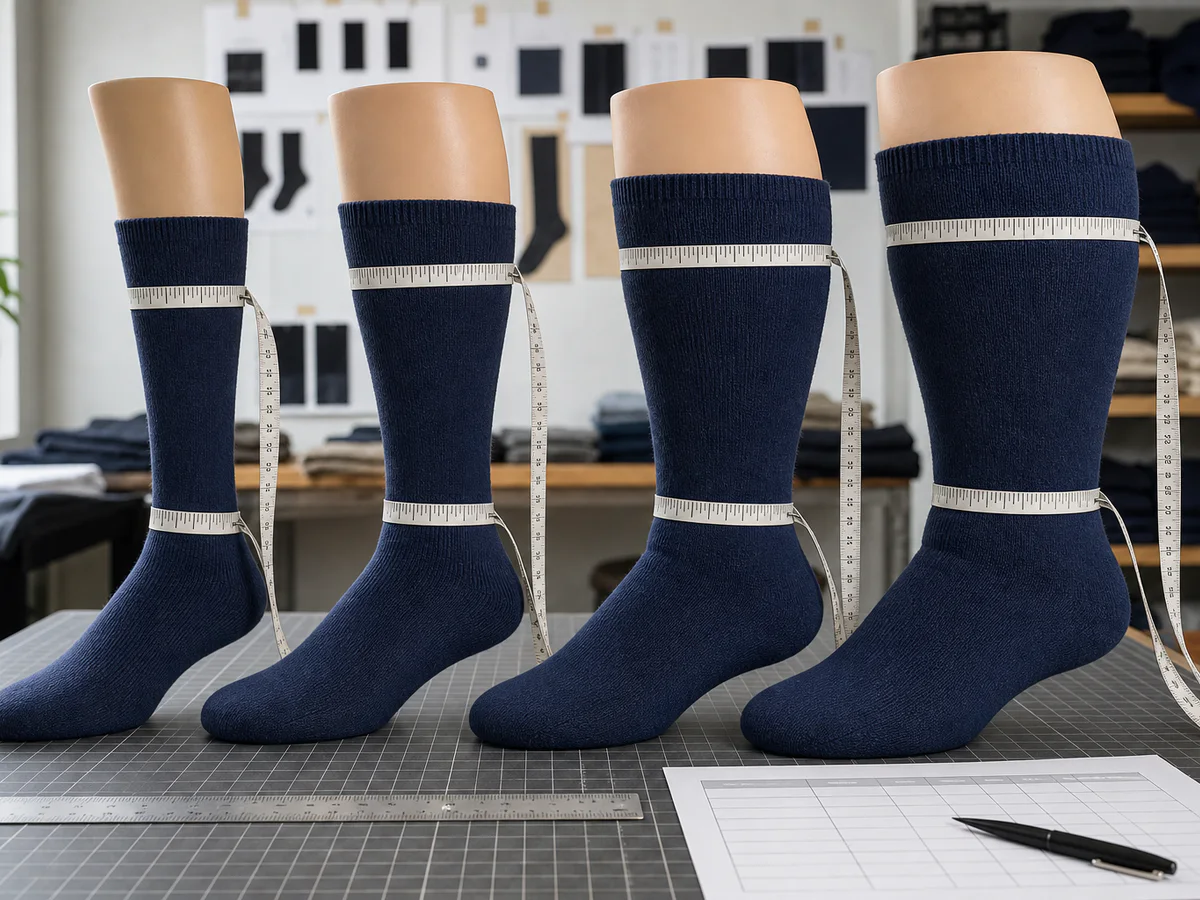
Build a plus size sock chart by separating foot size from ankle, calf, thigh and leg-length ranges. Publish recommended body measurements in inches and centimeters, explain measurement points and provide guidance for customers who fall between sizes.
Key Takeaways
- Separate body and product measurements.
- Use both centimeters and inches.
- Show exactly where to measure.
- State the priority measurement by product type.
- Include between-size guidance.
Choose measurements by product type
Crew and knee-high socks need foot, ankle, calf and height data. Thigh-high socks add thigh circumference and intended top position. Tights add waist or hip range and overall height.
Compression sizing generally gives greater priority to ankle, calf and length than to shoe size. The chart should reflect the logic of the actual product.
Separate wearer ranges from sock dimensions
Consumers need recommended body ranges. Factories need relaxed finished dimensions and tolerances. These are related but not identical tables.
Keep the technical specification in the product file and translate it into a simple retail chart. Do not publish a maximum laboratory stretch as the normal fit range.
Explain how to measure
Use a diagram and short instructions. Calf circumference should be measured around the widest point, while leg height should be measured vertically from the floor to the intended top edge.
Measurements should be taken against the skin or over the type of layer the product is designed to cover. If swelling varies, record the relevant range.
- Measure both legs when fit can differ.
- Keep the tape level and comfortably close.
- Do not pull the tape tightly.
- Record inches and centimeters.
Give useful between-size guidance
A shopper may match one size in the foot and another in the calf. State which measurement takes priority and whether another foot-calf combination is available.
For fashion socks, the desired look and length may affect the choice. For compression products, users should follow the product's specific sizing instructions and professional guidance where applicable.
Buyer questions
Frequently Asked Questions
Should a plus size sock chart use weight?
Weight alone is not precise enough for socks. Direct foot, ankle, calf, thigh and height measurements are more useful.
What is the difference between product and body measurements?
Product measurements describe the sock itself; body measurements describe the wearer range the sock is designed to fit.
Which measurement is most important?
It depends on the product. Calf is central for wide-calf socks, thigh for thigh-highs, and ankle plus calf for compression.