Direct answer
For wholesale plus size thigh-high socks, specify foot size, calf range, thigh range, total length and cuff construction separately. Wear-test the upper size limit for rolling, slipping, pressure marks and pattern distortion before approving bulk production.
Key Takeaways
- State an actual thigh circumference range.
- Separate over-the-knee and true thigh-high lengths.
- Test the cuff for both hold and comfort.
- Recheck stretch when adding stripes or graphics.
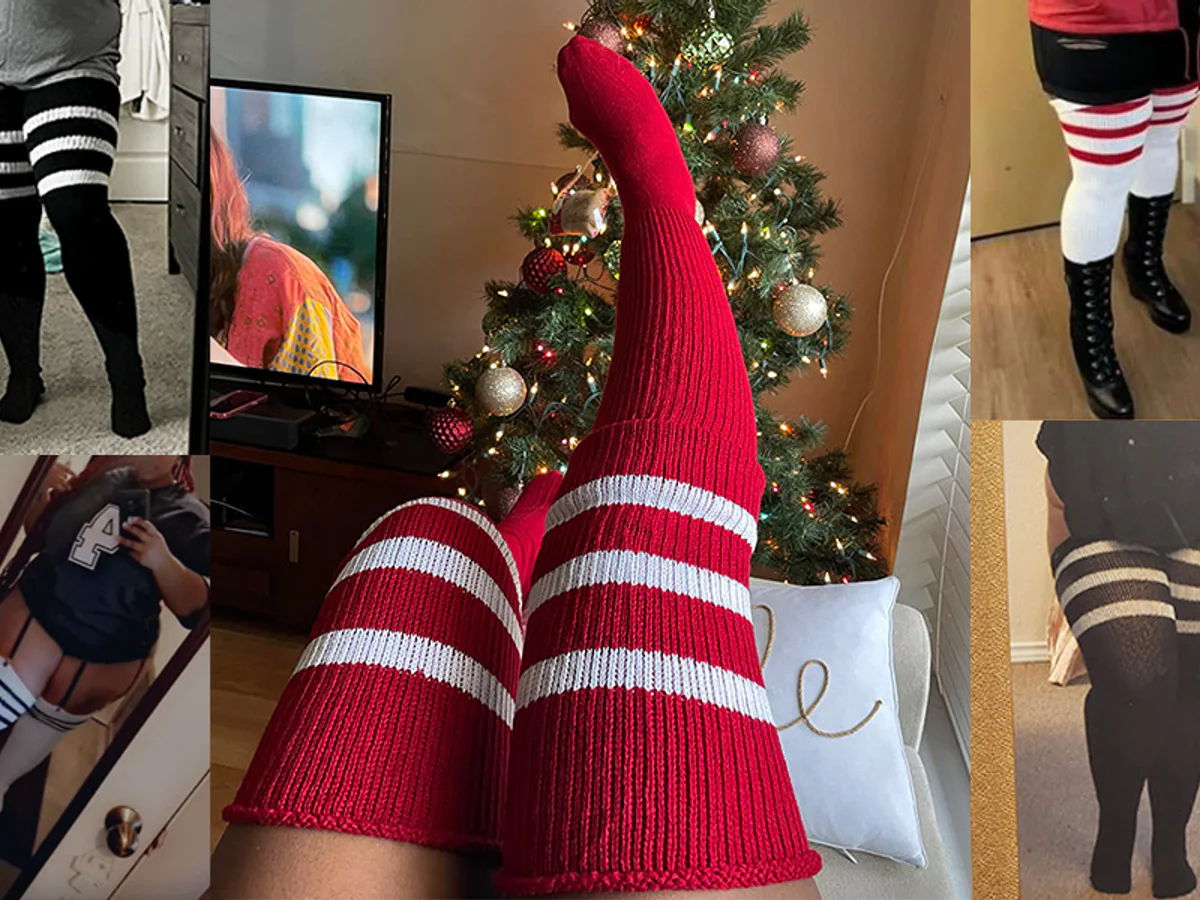
- Photograph fit on measured plus-size wearers.
Decide where the sock should finish
Over-the-knee and thigh-high are often used interchangeably, but they describe different fit goals. A product that reaches the thigh on a short wearer may stop near the knee on a tall wearer.
Define total sock length and the intended body position. If the program serves a broad height range, consider regular and extra-long versions rather than asking one construction to do everything.
Develop calf, thigh and cuff together
The sock body must pass over the widest calf before reaching the thigh. The upper band then needs enough width for comfort and enough recovery to remain in position.
A cuff can technically stretch to the target measurement but still roll because its structure concentrates tension at the edge. Wear testing should include walking, sitting and repeated movement, not only a standing photograph.
- Measure widest calf and intended thigh position.
- Record relaxed and recommended cuff circumference.
- Check for rolling, slipping and visible pressure lines.
- Test with and without optional garter support.
Protect stretch in patterned designs
Stripes, jacquard graphics and floating yarns can change the extension of the sock body. A plain development sample may fit correctly while the final graphic version feels narrower.
Approve the actual artwork and yarn colors on the final construction. Inspect the design at both relaxed and worn width so motifs do not become unreadable on the target leg.
Use fit evidence in wholesale selling
Retailers need more than a plus-size claim. Provide model measurements, product measurements and a clear range in inches and centimeters. Show the same style on more than one body profile when possible.
Good fit communication helps a retailer answer the most common pre-purchase question: will this reach my thigh without cutting in or falling down?
Buyer questions
Frequently Asked Questions
What measurements are needed for plus size thigh-high socks?
Foot size, calf circumference, thigh circumference, vertical leg length and intended cuff position are the core measurements.
Why do thigh-high socks roll down?
Common causes include an overly tight edge, insufficient cuff width, incorrect length, low recovery or a mismatch between calf and thigh shaping.
Can striped thigh-high socks fit differently from plain socks?
Yes. Pattern construction and yarn floats can reduce stretch, so the finished design should be tested again.