Direct answer
Private label plus size hosiery should be developed from height, waist, hip, thigh and leg-length ranges. Buyers should also define denier, waistband width, gusset, toe construction, recovery, color, snag resistance and packaging claims.
Key Takeaways
- Use height and body measurements, not weight alone.
- Specify waistband, brief and gusset construction.
- Check crotch position during movement.
- Test snagging and color consistency.
- Offer realistic shades and clear denier descriptions.
Build the size chart around body proportions
Hosiery stretches in several directions at once. A single weight-based chart cannot fully explain waist, hip, thigh and height combinations. Two wearers at the same weight may need very different leg lengths and waist constructions.
Use a matrix that includes height and hip or waist range, then validate the extremes. The brief should reach the intended position without excessive vertical tension or unused fabric at the ankle.
Prevent rolling waistbands and a low crotch
A narrow waistband can fold or create a concentrated line. A body section with insufficient depth can pull downward, while too much depth can sag. Both problems often lead shoppers to keep adjusting the garment.
Specify waistband width, rise, panel construction and gusset. Movement tests should include sitting, bending and walking so the fit is evaluated beyond a studio pose.
Define appearance and durability
Denier communicates approximate yarn weight and opacity, but construction also affects hand feel and strength. Sheer styles require careful handling tests around the toe, thigh and brief seams.
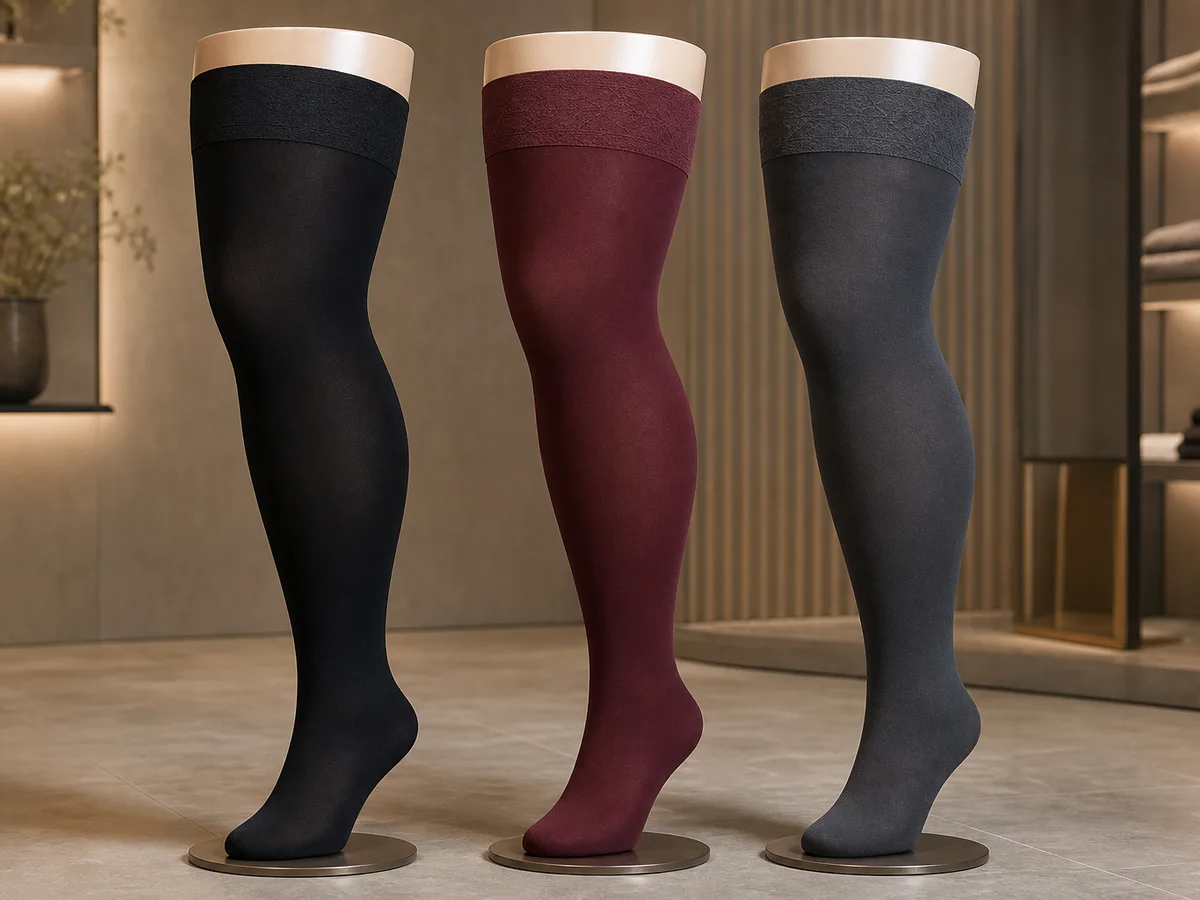
Approve color on stretched material because the appearance can change significantly when worn. For nude programs, build a deliberate shade range instead of using one generic beige for every market.
- Check toe reinforcement and seam placement.
- Inspect ladders, snags and holes after donning trials.
- Confirm opacity on the upper fit limit.
- Compare color under neutral lighting.
Prepare accurate retail packaging
The pack should state size logic, denier, finish, toe type, care method and whether the product provides fashion shaping or only a close fit. Avoid implying medical compression unless the product was developed and verified for that purpose.
Real model measurements and a clear fit illustration are especially useful online, where the shopper cannot feel the fabric before purchase.
Buyer questions
Frequently Asked Questions
What is the best way to size plus size tights?
Use height together with waist or hip range, then validate thigh room, rise and leg length on target wearers.
Why does the waistband roll down?
It may be too narrow, too tight, placed at the wrong height or paired with insufficient body depth.
Can plus size hosiery be private labeled?
Yes. Yarn, denier, color, waistband, toe, size chart and retail packaging can be developed for a private-label program.