Direct answer
A women's plus size compression sock private-label program should combine measured ankle, calf, foot and leg-length ranges with independently verified pressure. Build core colors and patterns only after the size architecture performs on representative wearers. Offer clear length and toe options where customer data supports them, and grade artwork so it remains balanced on wide calves.
Key Takeaways
- Base the range on measurements, not gendered size names.
- Separate width, foot and length grading.
- Check patterns on the maximum approved calf.
- Use verified claims and clear fitting instructions.
Build an inclusive measurement system
Women's plus-size customers are not one body shape. Some need a fuller calf with a standard foot, others need a fuller ankle, shorter leg or broader forefoot. Collect combinations rather than isolated averages.
Design adjacent sizes with understandable overlap and include short or tall options when data supports demand.
- Ankle and maximum calf bands.
- Foot length and forefoot width.
- Vertical leg length.
- Cuff position and opening.
Plan colors and patterns for wide calves
Core neutrals support repeat sales, while controlled seasonal colors and patterns create differentiation. Artwork should be designed for worn circumference because motifs widen and base yarn can become visible at stretch.
Keep important logos and fine lines away from zones with the greatest distortion. Approve each size on a leg form or wearer.
- Launch core colors before broad seasonal expansion.
- Grade motif scale across sizes.
- Photograph patterns at maximum approved stretch.
- Test colorfastness and contrast areas.
Validate comfort and pressure
Wearer trials should review donning, ankle wrinkles, cuff marks and movement over a full day. Test the final color and decoration because finishing can change hand feel and stretch.
Pressure verification is required for each marketed size. Avoid assuming the base construction remains within specification after grading.
- Minimum and maximum calf trials.
- Short and regular length checks.
- Post-wash fit and recovery.
- Size-specific pressure reports.
Prepare a clear private-label launch
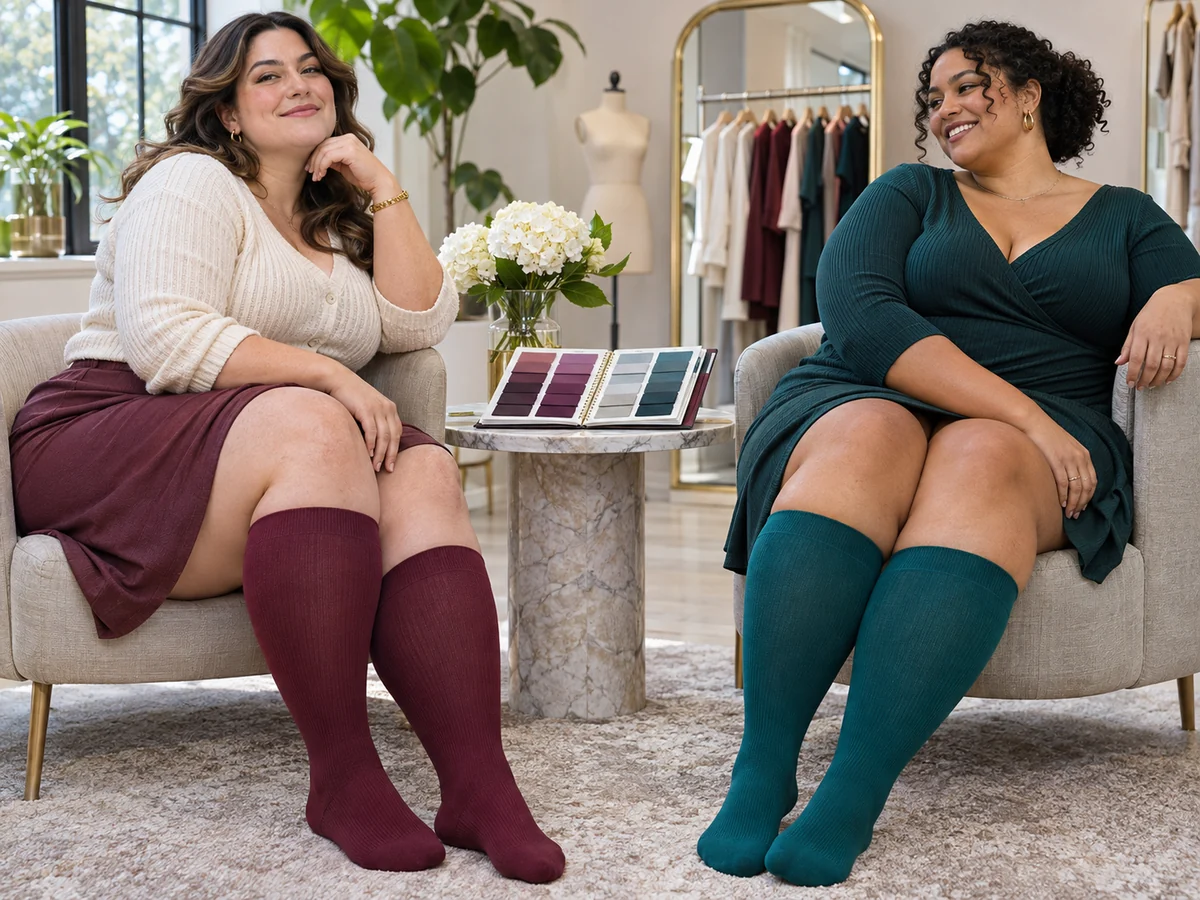
Packaging should lead with measurements, product construction and verified pressure rather than vague plus-size language. Photography should show realistic wide calves and accurate color.
Start with a focused SKU plan, monitor size sell-through and return reasons, then expand styles based on evidence.
- Measurement diagram and chart.
- Care and donning instructions.
- Traceable SKU, lot and color codes.
- Consistent marketplace and packaging copy.
Buyer questions
Frequently Asked Questions
What sizes should a women's plus size compression range include?
Use target customer measurements and sales-channel data. The range should cover ankle, calf, foot and length combinations rather than copy apparel labels.
Can one pattern scale work across all wide-calf sizes?
Not automatically. Motifs and spacing should be reviewed and sometimes regraded for each worn circumference.
What should be approved before private-label production?
Approve the complete size set, pressure reports, colors, artwork, wash results, packaging and retained pre-production samples.