Direct answer
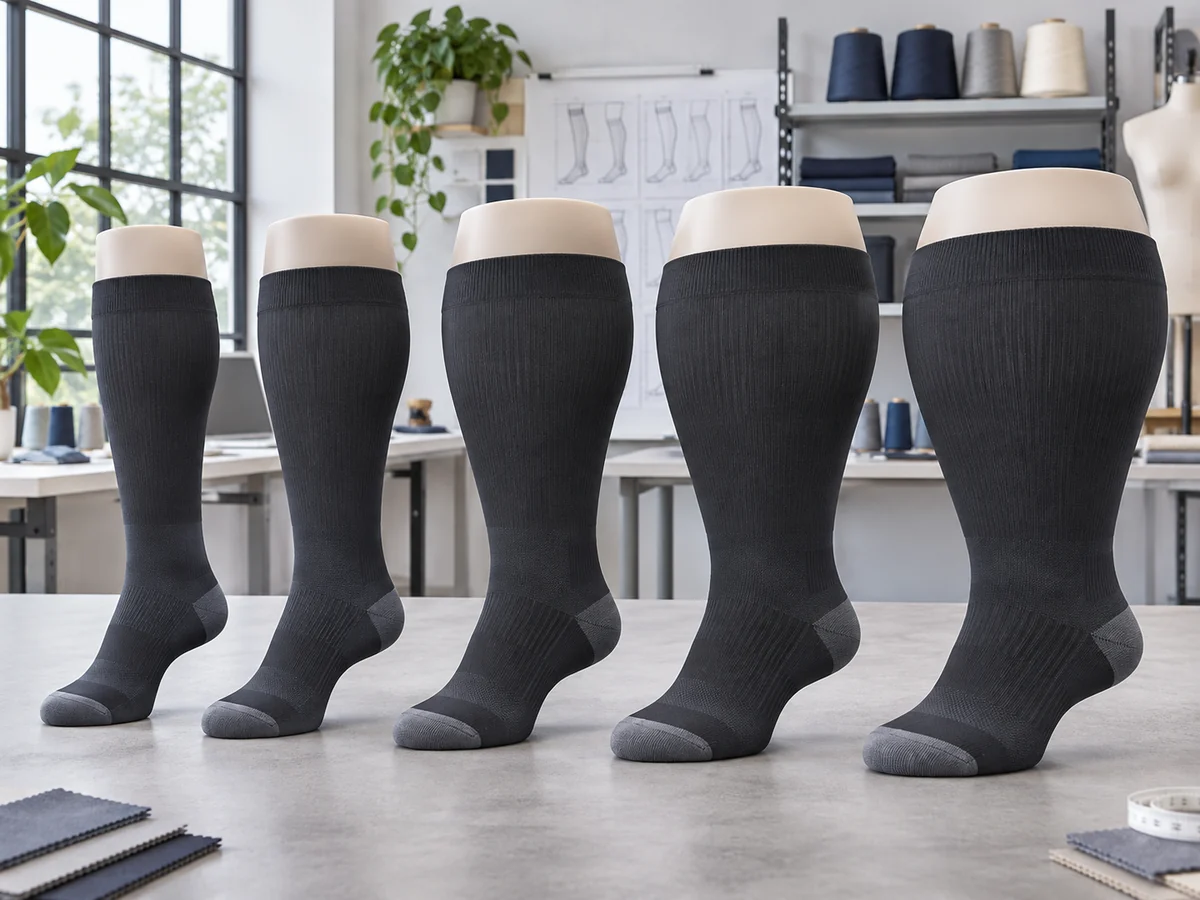
OEM size grading for wide calf compression socks should use independent rules for ankle circumference, maximum calf, top opening, foot length and sock height. Begin with target body-measurement bands, then engineer finished dimensions and yarn tension for each size. Verify fit and pressure on every graded size because scaling stitch counts or elastomer tension uniformly can create loose ankles, tight cuffs or inconsistent compression.
Key Takeaways
- Start with body-measurement bands, not apparel labels alone.
- Grade each fit zone independently.
- Confirm construction and pressure on every size.
- Control overlap between adjacent sizes to reduce uncertainty.
Define the target size architecture
Choose the number of sizes from actual customer measurements and channel needs. One universal wide-calf size often spans too much variation, while too many sizes can make inventory difficult. Build bands around ankle, calf and length combinations that occur in the target market.
Use neutral size names or clear measurement ranges. Apparel labels such as XL or 4XL vary between brands and cannot replace a chart with inches or centimeters.
- Set minimum and maximum ankle and calf values for each size.
- Define short, regular or tall options where demand supports them.
- Review overlap between neighboring sizes.
- Keep naming consistent across every sales channel.
Grade the construction by fit zone
The factory can adjust stitch counts, cylinder selection, elastomer input, yarn feed and shaping by zone. The goal is not simply a wider tube; the ankle must remain controlled while the calf and cuff accommodate greater circumference.
Foot grading should follow foot data rather than calf size. Many plus-size wearers need extra calf room without an excessively long foot, so linked enlargement creates returns.
- Calf width and top opening.
- Ankle contour and heel pocket.
- Foot length, forefoot width and instep.
- Overall sock height and cuff position.
Verify pressure and recovery size by size
A base-size result cannot be assumed for larger sizes. Changes in stitch count, yarn extension and leg circumference can alter pressure. Test each production size on the relevant measurement range using the agreed method.
Repeat dimensional, stretch-recovery and wash checks after grading changes. Keep approved samples so bulk lots can be compared with the intended shape and hand feel.
- Record size-specific machine and yarn settings.
- Test at representative ankle and calf circumferences.
- Compare pre-wash and post-wash dimensions.
- Retain data with the approved size specification.
Approve the range as a connected system
Review all sizes together before bulk production. Side-by-side evaluation reveals unexpected jumps in foot length, cuff width, color appearance and logo scale. Packaging and online charts should use the same final data.
Pilot quantities can identify where customers cluster and which size boundaries need adjustment. Use returns and fitting questions as structured evidence for the next production run.
- Hold a full-size-set approval meeting.
- Check artwork and color at maximum stretch.
- Match carton and label codes to the approved sizes.
- Track return reasons by measurement band.
Buyer questions
Frequently Asked Questions
Can one compression construction be scaled to every plus size?
Not reliably without verification. Larger sizes may require changes in stitch count, elastomer control and shaping to preserve fit and pressure.
Should foot length increase with calf circumference?
Only when target customer data supports it. Foot and calf measurements should be graded independently.
Does every size need pressure testing?
Each marketed production size should be verified against its approved pressure and dimensional specification using the agreed test method.