Direct answer
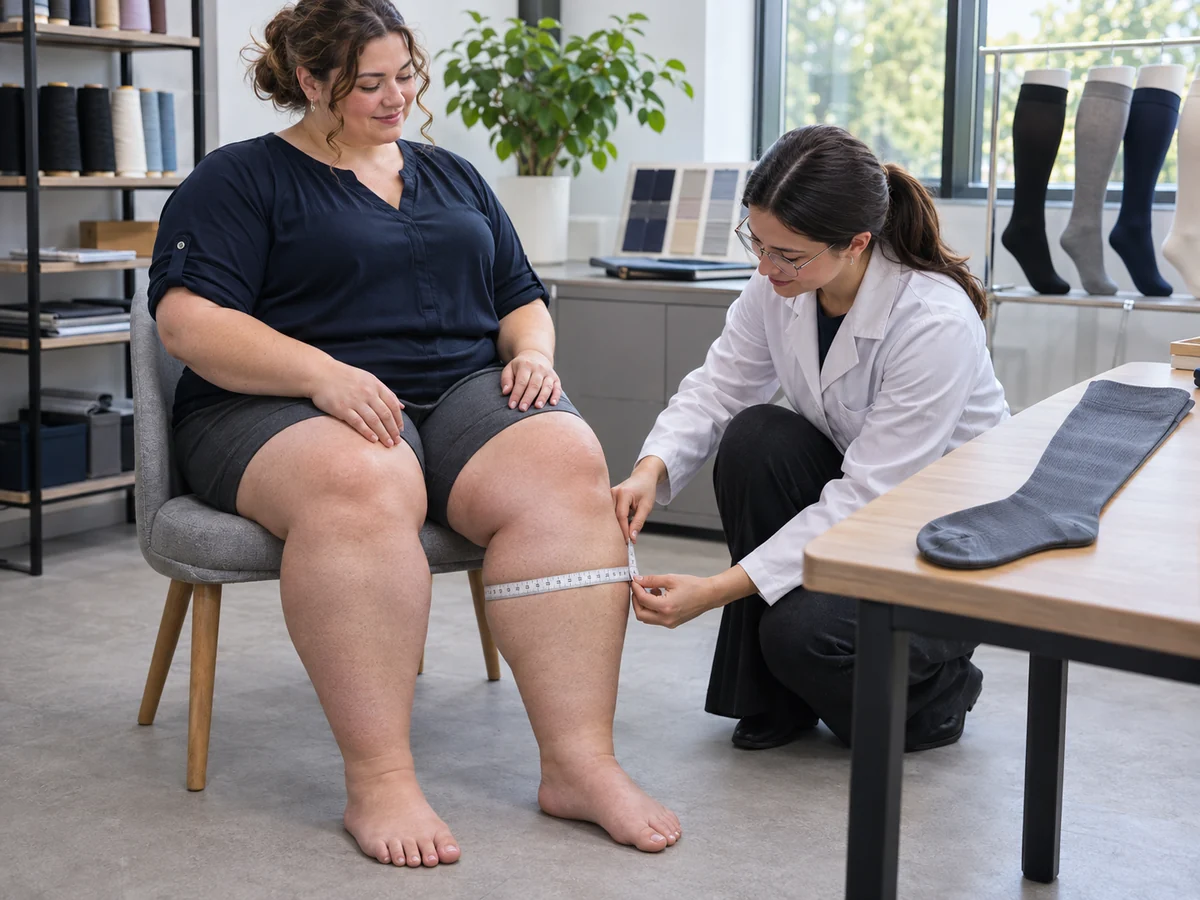
For extra wide calf compression socks, record ankle circumference at the narrowest point, calf circumference at the widest point, floor-to-knee length, foot length and the intended top-band position. Take measurements on both legs and keep them as a measurement set rather than mixing averages. A B2B size chart should connect these body measurements to finished-sock dimensions, practical stretch limits and the verified pressure specification.
Key Takeaways
- Measure ankle, calf, leg length and foot as a connected set.
- Use the larger leg when the two sides differ for fit selection.
- Separate body measurements from finished-product dimensions.
- Validate the chart on real wide-calf wearers before bulk production.
Collect the complete body measurement set
The ankle controls the starting point of a graduated compression profile, while the calf determines required circumference and the leg length controls where the cuff sits. Foot length and instep volume affect comfort and donning. Measuring only the widest calf can produce a sock that fits one zone but fails elsewhere.
Use a flexible tape without pulling it tight. Record both legs, the time of measurement and whether the wearer was standing or seated. Consistent conditions make development samples and later fit reviews easier to compare.
- Ankle circumference at the narrowest point above the ankle bone.
- Calf circumference at the widest point.
- Floor-to-knee or heel-to-cuff length at the intended wearing height.
- Foot length, ball circumference and instep where relevant.
Translate body data into product specifications
Body measurements are not the same as relaxed sock measurements. The factory must define negative ease, yarn stretch, recovery and practical donning limits for each zone. A finished-sock specification should show relaxed dimensions, controlled-stretch dimensions and tolerances.
Do not enlarge every measurement by the same percentage. A wider calf may coexist with a standard foot, a fuller ankle or a shorter leg. Independent grading reduces baggy ankles, long feet and cuffs that finish behind the knee.
- Grade ankle, calf, cuff, foot and length independently.
- Document the intended body-measurement range for every size.
- Define stretch and recovery checks for the finished construction.
- Link each size to its verified pressure result.
Validate the size chart on representative wearers
A leg form can support development, but wearer trials reveal donning difficulty, cuff pressure, ankle wrinkling and movement during a full day. Include wearers near the minimum, middle and maximum measurements of each size rather than testing only an average calf.
Capture structured feedback after donning, walking, sitting and removal. Recheck the sock after washing because shrinkage or recovery loss can change the usable measurement range.
- Test both the smallest and largest approved calf for each size.
- Record cuff marks, slipping, wrinkles and donning time.
- Compare pre-wash and post-wash fit.
- Retain approved wearer photos and measurement records.
Publish a buyer-friendly measurement chart
Retail charts should state exactly where each measurement is taken and use the destination market's units. A diagram, concise table and fit notes reduce customer uncertainty better than a generic plus-size label.
For B2B orders, keep the consumer chart aligned with the factory specification and packaging. If measurements or construction change, update every channel at the same time.
- Show inches and centimeters where the market needs both.
- Use the same size names on product, packaging and online listings.
- Explain how to choose when measurements fall between sizes.
- Avoid promising fit outside the validated range.
Buyer questions
Frequently Asked Questions
Is calf circumference enough to size wide calf compression socks?
No. Ankle circumference, leg length, foot dimensions and cuff position also affect fit, donning and the pressure profile.
Should both legs be measured?
Yes. Record both legs because measurements can differ, then follow the product's fitting instructions for selecting the appropriate size.
How should an OEM buyer approve a size chart?
Approve it against finished-sock measurements, wearer trials, wash results and verified pressure data for every production size.