Direct answer
The most effective way to reduce wide-calf compression sock returns is to replace vague plus-size labels with measurable calf ranges, accurate product imagery, clear donning guidance and ongoing analysis of fit-related return reasons.
Key Takeaways
- Publish calf ranges by size.
- Photograph products on genuinely wide calves.
- Explain donning and cuff placement.
- Code returns by specific fit reason.
Find the true return reason
A generic code such as too small hides whether the problem was calf width, foot length, cuff pressure, sock height or donning difficulty. Use specific reason codes and review them by SKU and size.
Combine return comments with customer-service questions to identify where product information or grading needs correction.
- Calf too tight.
- Foot too long or short.
- Cuff rolls or slips.
- Hard to put on.
Replace labels with measurements
Terms such as XL and plus size vary between brands. Show the actual calf circumference, foot size and sock height range for each product.
Explain how and where to measure, and state whether the measurement should be taken at the widest calf point.
- Calf range in inches and centimeters.
- Foot-size conversion.
- Sock-height information.
- Measurement diagram.
Set accurate visual expectations
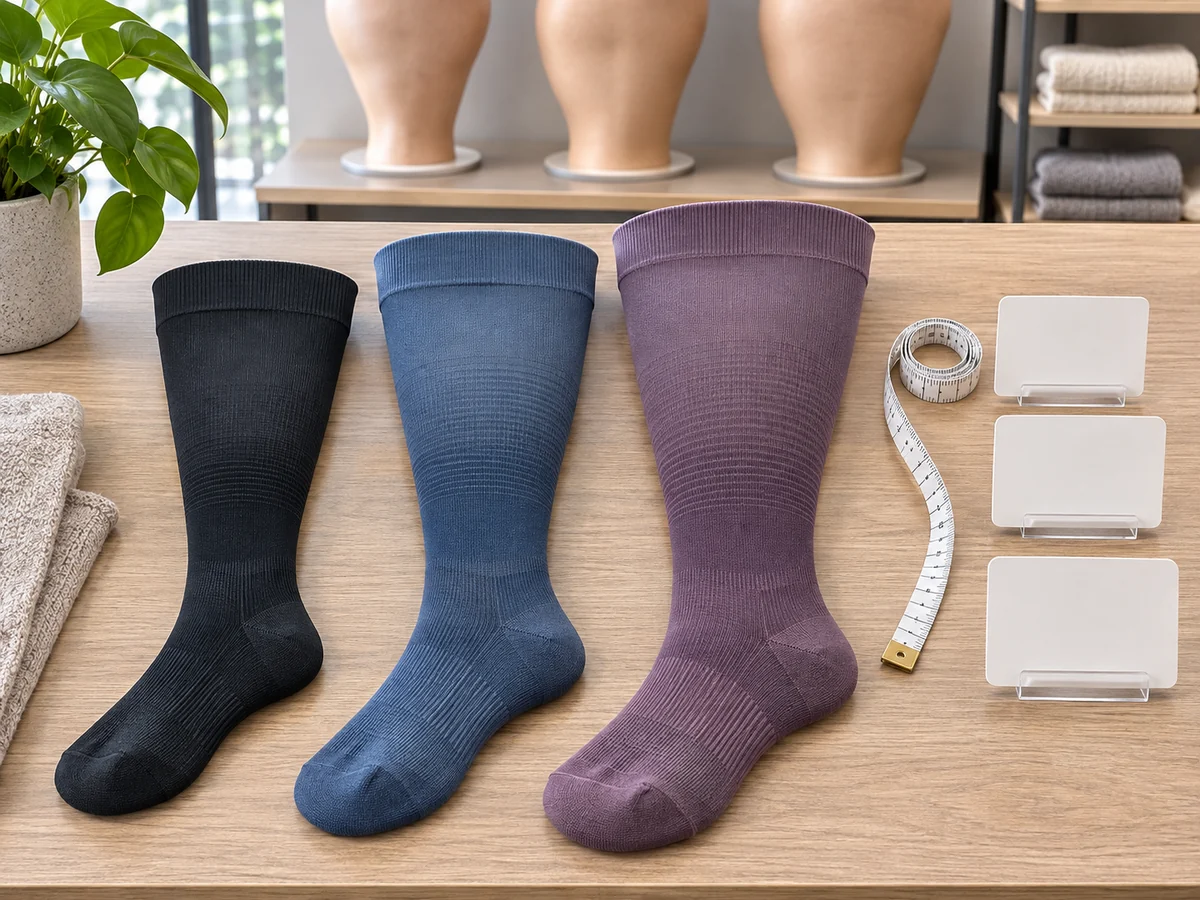
Use multiple angles and include the full cuff, calf, ankle, heel and toe. Product photos should show the sock on a model within the claimed wide-calf range.
Avoid stretching a standard sock on a narrow form and presenting it as a plus-size fit.
- Full-length product view.
- Real wide-calf model.
- Cuff close-up.
- Color under neutral lighting.
Close the loop with production
Share return patterns with the factory and compare them to measurement and pressure records. Recurrent complaints may point to grading, top-band, height or batch-consistency issues.
Test corrective prototypes before changing the whole range and update listings when specifications change.
- Monthly reason-code review.
- Batch traceability.
- Corrective sample trial.
- Listing version control.
Buyer questions
Frequently Asked Questions
Why do wide-calf compression socks get returned?
Common reasons include unclear sizing, tight cuffs, difficult donning, wrong height, foot mismatch, slippage and expectations created by inaccurate images.
Will more sizes reduce returns?
Only when each size is meaningfully graded and explained. More labels without better measurements can increase confusion.
Should return data be shared with the factory?
Yes. Specific, batch-linked return reasons can guide fit corrections and quality improvements.