Direct answer
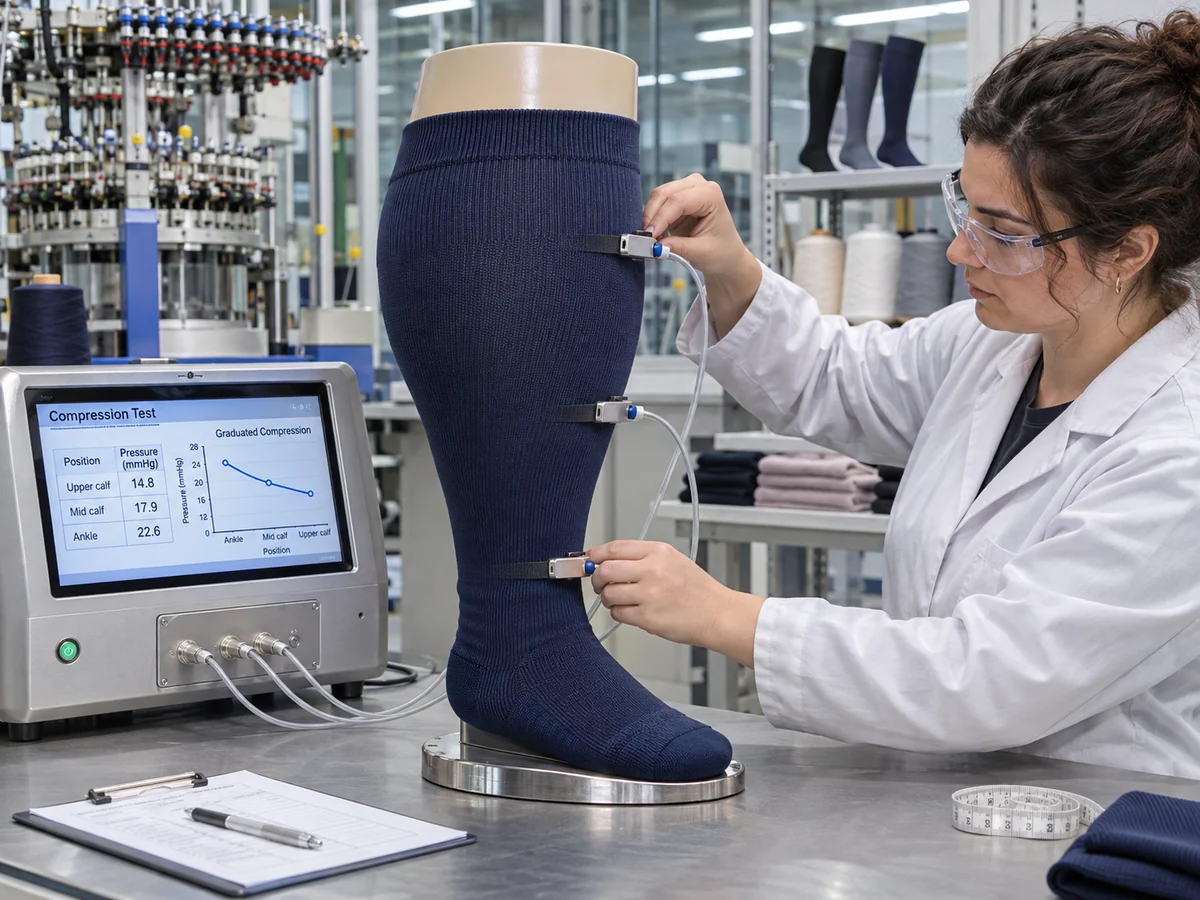
Wide calf graduated compression socks should be tested on defined leg dimensions at agreed ankle, lower-calf and upper-calf positions. The report should identify the method, equipment, conditioning, sample size, product size and acceptance tolerance. Test every marketed size and repeat relevant checks after construction, yarn, finishing or size-grading changes. Pressure data should be reviewed together with dimensions, stretch recovery and wearer fit.
Key Takeaways
- Define the method and leg dimensions before testing.
- Test every size, not only the development sample.
- Condition and wash samples consistently.
- Connect reports to production lots and retained samples.
Write a test plan before sampling
A useful test plan names the target pressure range, gradient, test positions, leg dimensions, conditioning environment and tolerance. Without these details, results from different laboratories or suppliers may not be comparable.
Include the exact product size, yarn lot and finishing condition on every report. Wide-calf constructions can behave differently across the intended circumference range.
- Target ankle and calf pressures.
- Test leg dimensions and measuring positions.
- Sample conditioning and wash state.
- Acceptance criteria and report format.
Cover the complete extended-size range
Test data from a regular-size sock cannot establish performance for an extra-wide version. Stitch counts, yarn extension and curvature change with size. Each marketed size needs evidence at representative measurements.
Where one size covers a broad calf interval, review both lower and upper boundaries. A product can pass in the middle yet fall outside tolerance at an extreme.
- Test every production size.
- Include lower, middle and upper circumference conditions.
- Record ankle-to-calf gradient.
- Compare right and left production samples.
Connect pressure results with durability
Pressure can change after laundering, heat exposure and repeated stretch. Use the intended care label for wash conditioning, then repeat pressure and dimensional checks at the agreed cycle count.
Inspect elastic recovery, cuff shape and ankle contour at the same time. A product that retains pressure but shrinks beyond the chart can still create a poor customer experience.
- Measure before and after washing.
- Check stretch recovery and dimensional change.
- Inspect yarn damage and elastomer exposure.
- Retain samples from each test stage.
Control repeat production
Translate the approved result into machine settings, yarn specifications, in-process measurements and final inspection rules. The goal is not one passing laboratory sample but consistent commercial lots.
Define when retesting is required, such as a yarn supplier change, size modification, finishing change or significant machine adjustment. Keep traceable lot and report numbers.
- Link reports to approved specifications.
- Set in-process circumference and weight checks.
- Use retained reference samples for comparison.
- Document change-control triggers.
Buyer questions
Frequently Asked Questions
Can pressure be checked by how tight a sock feels?
No. Perceived tightness is subjective; an agreed instrumented method is needed to verify a stated pressure range.
Why test every wide-calf size?
Changes in circumference, stitch count and yarn extension can alter pressure and gradient across sizes.
When should compression socks be retested?
Retest when the construction, yarn, size grading, finishing or other controlled variables change, and according to the buyer's ongoing quality plan.