Direct answer
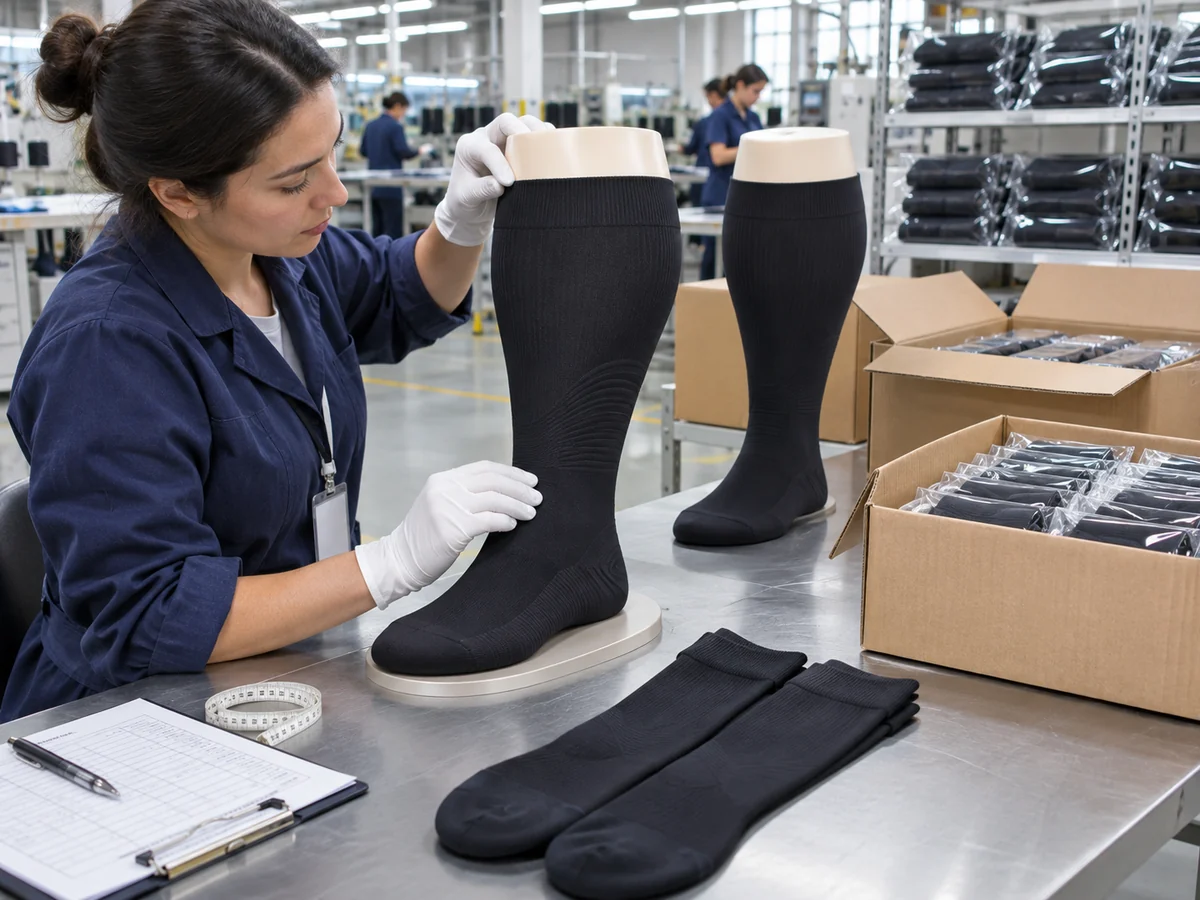
Bulk inspection should compare sampled wide-calf compression socks against the sealed approval sample, measurement tolerances, pressure plan, workmanship standard and final packaging specification.
Key Takeaways
- Inspect by size and color, not only total quantity.
- Use tolerances agreed before production.
- Trace pressure evidence to production lots.
- Check labels and cartons as carefully as knitting.
Build the inspection plan before production
Define sampling levels, defects, tolerances and required documents in the purchase specification. This prevents subjective decisions at the shipping stage.
Identify critical issues such as wrong size labels, unverified pressure, holes, severe measurement deviation and mixed cartons.
- Sampling method.
- Critical, major and minor defects.
- Measurement tolerances.
- Document checklist.
Check measurements and workmanship
Measure each selected size and color against the approved table. Review toe closing, heel formation, elastic exposure, loose yarn, stains, symmetry and cuff consistency.
Include practical stretch checks for the top opening and calf because relaxed measurements alone do not describe wide-calf fit.
- Foot and leg dimensions.
- Top-opening stretch.
- Toe and heel workmanship.
- Pair matching.
Verify performance records
Confirm that pressure and relevant wash tests correspond to approved sizes and production materials. If yarn, machine settings or construction changed, request revalidation.
Keep lot references so complaints can be traced back to production evidence.
- Pressure report linkage.
- Material lot records.
- Wash and recovery results.
- Change-control approval.
Audit packing and traceability
Check size labels, fiber content, care, barcodes, inserts, polybags and carton assortments. A technically correct sock can still create returns when the wrong size is packed.
Photograph carton marks and retain the final inspection report with corrective actions.
- Barcode scan test.
- Size-to-product verification.
- Carton assortment count.
- Shipment photo record.
Buyer questions
Frequently Asked Questions
Should every pair be pressure tested?
Usually a documented sampling and process-control plan is used. The appropriate method depends on product requirements and applicable standards.
What is a critical defect?
It is defined in the approved inspection plan, but examples may include wrong safety-critical information, serious damage or a product that cannot meet its intended specification.
Why inspect packaging during sock QC?
Incorrect labels, sizes or carton assortments directly cause customer confusion, returns and inventory problems.