Direct answer
Effective plus-size compression sock packaging reduces fit uncertainty by showing actual calf ranges, measurement instructions, verified product specifications, care details and traceable size identification.
Key Takeaways
- Make calf range easy to find.
- Keep pressure and size statements consistent.
- Validate regulatory text for the target market.
- Use traceable size and lot codes.
Design around fit confidence
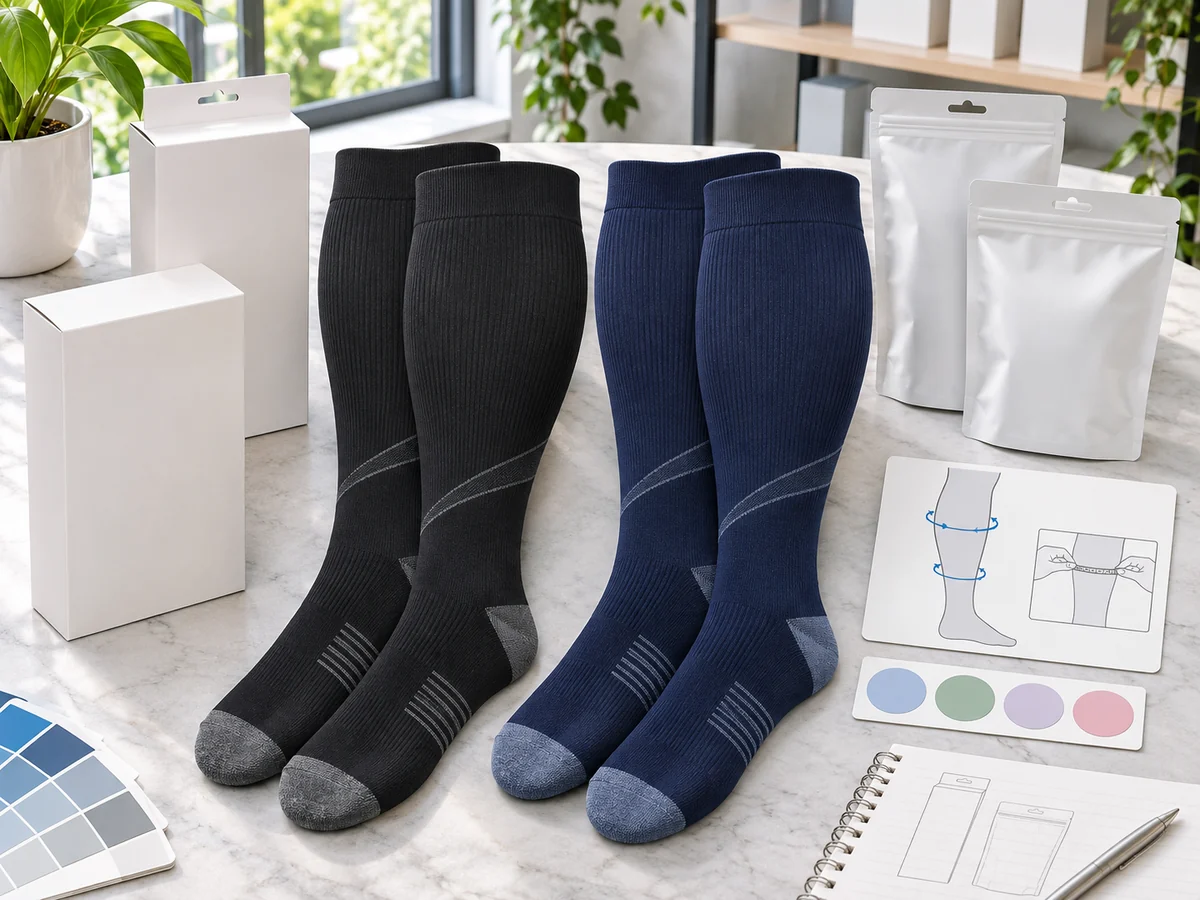
The pack should help a shopper choose a size without opening it. Put the calf range, foot size and sock height in a legible table, supported by a simple measurement diagram.
Avoid hiding the most important sizing information in small print or using only a generic plus-size badge.
- Calf circumference by size.
- Foot-size conversion.
- Measurement location.
- Sock height option.
Control technical information
Pressure level, fiber content, care and construction statements must match the approved product. Maintain one master data sheet so boxes, inserts, stickers and online listings do not conflict.
Claims should be reviewed for the destination market before printing.
- Approved pressure wording.
- Fiber composition.
- Care symbols and text.
- Country and importer details where required.
Make size identification operational
Use color coding only as a secondary aid because it can change across print runs. Pair it with readable size codes, barcodes and carton labels.
Factories and warehouses should be able to trace each packed pair to its size, color and lot.
- Human-readable size.
- Scannable barcode.
- Lot or batch reference.
- Carton assortment label.
Choose packaging that fits the channel
Retail boxes, hanging cards, pouches and ecommerce packs have different protection and display needs. Test how the wide-calf sock is folded so it does not distort the cuff or confuse the customer.
For lower-impact packaging, reduce unnecessary volume while preserving required information and product protection.
- Retail shelf format.
- Ecommerce shipping durability.
- Fold and presentation trial.
- Material-reduction review.
Buyer questions
Frequently Asked Questions
What size information belongs on the front?
At minimum, the shopper should quickly identify the size and that it is a wide-calf or plus-size product. Detailed calf and foot ranges can be presented in a clearly visible chart.
Can one package serve multiple countries?
Sometimes, but language, care, fiber, importer and product-claim requirements vary. Obtain destination-specific compliance advice.
Should packaging show compression pressure?
If a pressure specification is claimed, it should be stated consistently and supported by the approved product evidence.