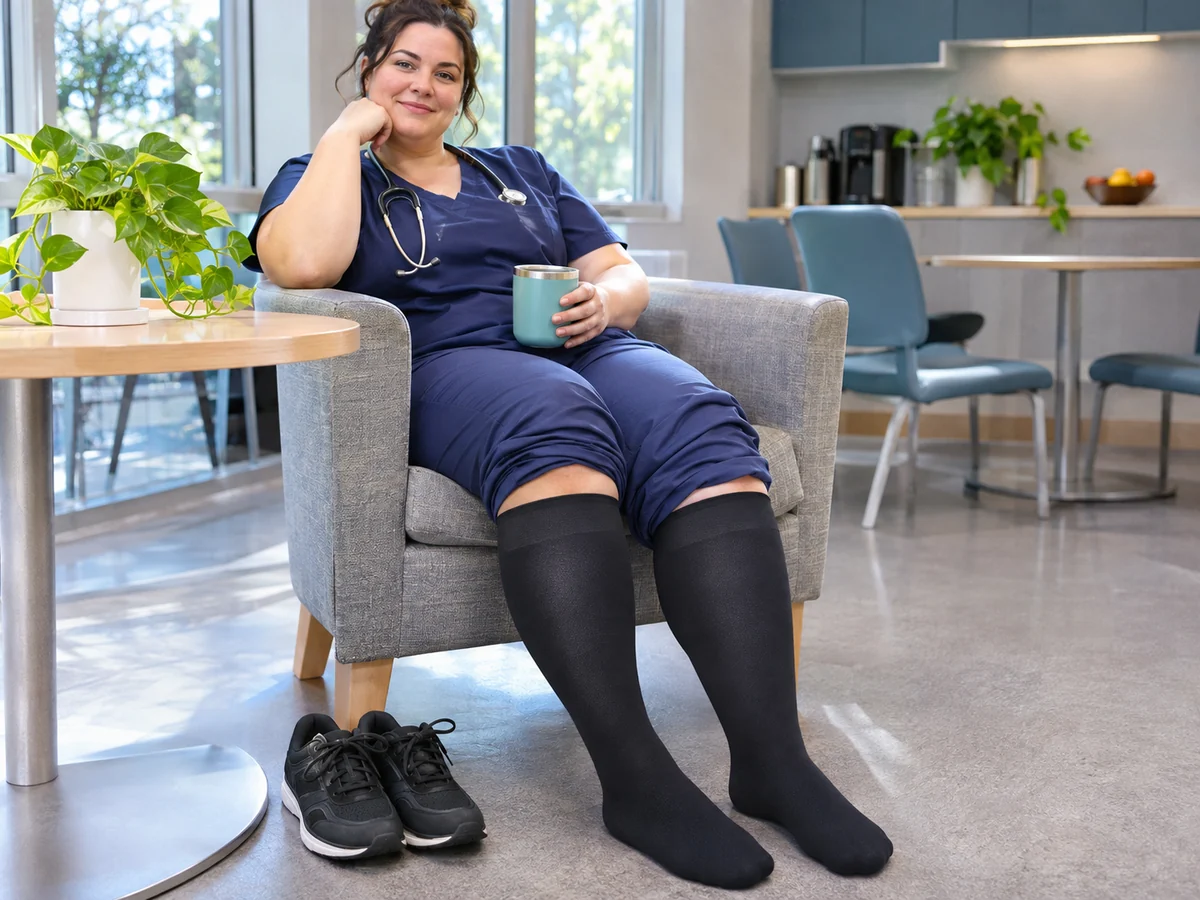
Direct answer
A custom wide calf compression sock program for nurses should begin with measured ankle, calf and leg-length sizing, then add verified pressure, practical donning, moisture management and abrasion resistance. Buyers can customize uniform colors, approved all-over patterns, knitted or transferred logos, cuff construction, cushioning, packaging and private-label size systems. Pressure claims must be verified for every size, and health-related suitability should not be assumed from occupation alone.
Key Takeaways
- Fit the product to measured users, not an occupation label.
- Prioritize durability, moisture control and practical donning.
- Verify pressure and wash performance for every size.
- Customize colors, patterns and private-label packaging only after fit approval.
Define the standing-work product brief
Nursing and other standing-work channels may value all-day fit, durable toes and heels, moisture management and colors that coordinate with uniforms. Custom programs can use hospital-group colors, restrained healthcare motifs or retail patterns after artwork is checked at wide-calf stretch.
Build the size system from actual ankle, calf and leg-length data. A broad unisex label can exclude users at both ends of the range.
- Target shift length and footwear.
- Custom uniform colors and approved patterns.
- Cushioning and seam preferences.
- Measurement and length range.
Engineer durability and moisture management
High-use products need reinforced abrasion zones without excessive bulk inside work shoes. Yarn selection, plating and finishing should support moisture movement and repeat washing.
Evaluate dry time, color change, pilling, heel wear and toe wear alongside pressure and fit. The strongest yarn is not useful if the sock becomes harsh or difficult to put on.
- Reinforced heel and toe.
- Smooth toe construction.
- Moisture-management testing.
- Repeated-wash dimensional checks.
Test realistic shift conditions
Wear trials should include walking, prolonged standing, sitting and warm footwear. Record slipping, cuff marks, ankle wrinkles and moisture perception after the intended wear period.
Include multiple calf and length combinations. A product that stays up on one leg shape may roll or concentrate pressure on another.
- Full-shift wearer feedback.
- Donning before work and removal afterward.
- Shoe and uniform compatibility.
- Post-wash repeat trials.
Create a focused custom and private-label offer
Launch with core uniform colors and a controlled size matrix, then add custom patterns, knitted logos or transfer logos after fit data is stable. Review logo placement on the stretched sock so branding remains readable without creating a rigid area.
Private-label options can include size-specific cartons, belly bands, pouches, barcode labels, care inserts and multipacks. Provide buyers with measurement diagrams, pressure reports, approved product photos and claim-reviewed copy before packaging is printed.
- Uniform colors, patterns and custom logo placement.
- Soft cuff, cushioning and toe-seam options.
- Size-specific private-label cartons and barcodes.
- Pre-production artwork and stretched-logo approval.
Buyer questions
Frequently Asked Questions
What pressure level should nurses wear?
That can depend on intended use and individual circumstances. Products should present verified specifications, while users follow product instructions and qualified guidance where appropriate.
Which features matter for long shifts?
Measured fit, practical donning, moisture management, durable heel and toe areas, stable cuffs and wash performance are useful development priorities.
What can be customized on wide calf compression socks for nurses?
Buyers can develop uniform colors, approved patterns, knitted or transferred logos, cuff and cushioning details, size systems, multipacks and private-label packaging. Fit and pressure should be approved before artwork and packaging are finalized.