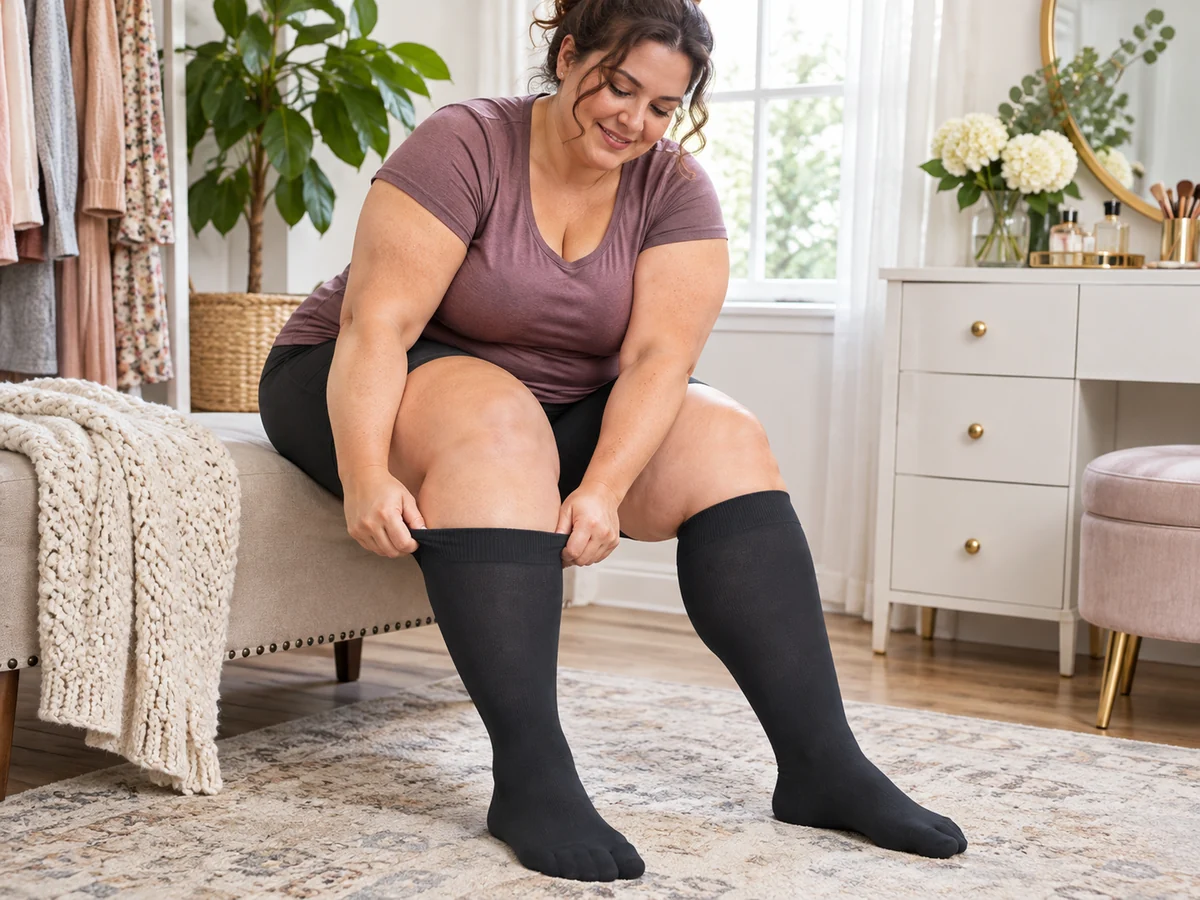
Direct answer
An easy-on plus size compression sock should provide controlled entry stretch through the cuff, calf, heel and instep while preserving the approved pressure profile. Product development should evaluate opening width, heel pocket, foot length, yarn friction and recovery as separate variables. Donning trials with representative wide-calf users are essential because a sock can meet pressure targets yet be impractical to put on or remove.
Key Takeaways
- Engineer entry stretch by zone rather than reducing all tension.
- Give the heel and instep enough shaped volume.
- Test donning and removal on representative users.
- Verify pressure after every ease-of-use modification.
Identify where donning becomes difficult
Difficulty may occur at the cuff opening, widest calf, heel turn or instep. Observe users rather than assuming the tightest-looking zone is the problem. Hand strength, reach and technique also affect the experience.
Record donning time, required effort, fabric bunching and whether the sock can be positioned without excessive pulling on the cuff.
- Cuff entry and stretch limit.
- Calf passage and yarn friction.
- Heel pocket depth.
- Instep and forefoot volume.
Balance stretch, recovery and shaping
A larger opening alone can cause slipping or reduce control. Combine adequate circumference with elastic recovery and anatomical shaping. The sock should expand during donning, then return smoothly without wrinkles.
Use yarn and finishing choices that reduce harsh surface friction while maintaining durability. Evaluate the complete construction after washing.
- Grade cuff and calf independently.
- Shape the heel rather than relying on stretch alone.
- Avoid bulky seams at high-friction entry zones.
- Check recovery after repeated donning cycles.
Run practical wearer trials
Include people near the maximum calf and ankle measurements, plus users with varied hand strength and mobility where relevant to the target market. Provide the intended instructions and any donning aid that will accompany the product.
A successful trial covers application, full-day wear, repositioning and removal. Note cuff rolling, ankle wrinkles and pressure discomfort as well as speed.
- Test dry and normal daily-use conditions.
- Record donning and removal time.
- Check correct heel and cuff placement.
- Gather structured comments instead of general ratings.
Approve ease of use without weakening claims
Every construction change needs dimensional and pressure verification. Easy-on language should describe the tested product experience and avoid implying universal ease for every wearer.
Packaging can improve results with illustrated steps, size guidance and care information. Clear instructions reduce misuse and avoidable returns.
- Retest the final decorated and colored product.
- Include step-by-step donning instructions.
- State the validated measurement range.
- Offer appropriate guidance on donning aids.
Buyer questions
Frequently Asked Questions
Does easy-on mean low compression?
No. Ease of donning depends on shaping, entry stretch, friction and technique. The stated pressure still requires independent verification.
What makes wide-calf compression socks hard to put on?
Common causes include insufficient cuff opening, a shallow heel pocket, tight instep, high surface friction and a size range that does not match the wearer.
Should donning aids be included in OEM programs?
They can be considered for the target customer and channel, but the sock should still be evaluated with the exact instructions and accessories supplied.