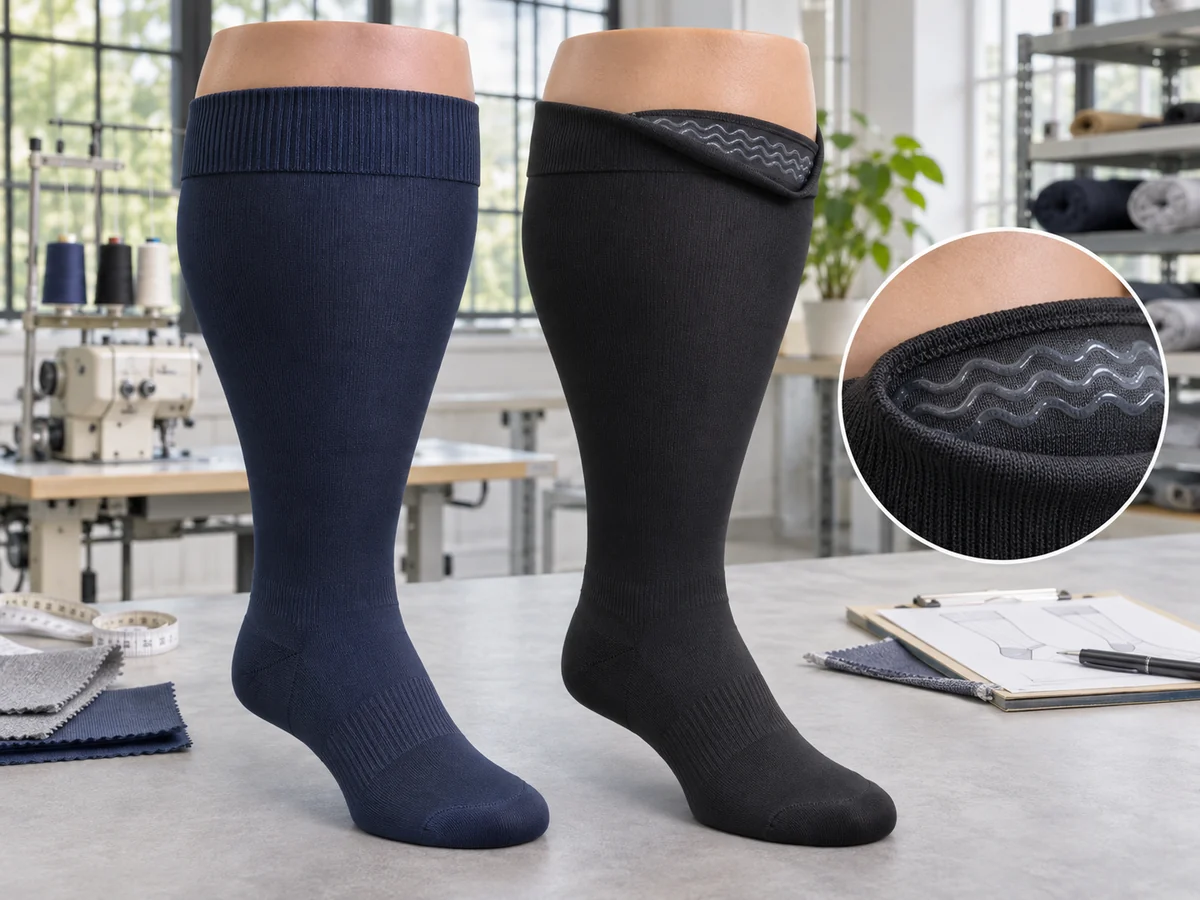
Direct answer
Silicone grip bands can add stay-up support, while soft knitted cuffs rely on elastic structure and a larger contact area. Neither option is automatically better for every wide-calf program. Buyers should compare hold, top-opening stretch, skin contact, rolling, wash durability and the effect on donning. The selected cuff must be tested on the minimum and maximum approved calf circumferences and included in final pressure and fit verification.
Key Takeaways
- Choose cuff structure for the target wearer and channel.
- Test hold at both ends of the calf range.
- Control local pressure and skin-contact materials.
- Recheck durability after washing and repeated stretch.
Compare how each cuff creates hold
A soft cuff distributes elastic hold through knitted courses and surface area. A silicone band adds friction against the skin, often allowing a lighter knit structure. Leg shape, movement and moisture affect both systems.
Wide calves need sufficient opening circumference so the band does not become a narrow pressure point. Review the cuff as part of the whole sock, not as a separate trim.
- Top-opening relaxed and stretched dimensions.
- Contact width and edge construction.
- Friction and movement during wear.
- Compatibility with target skin-contact requirements.
Evaluate comfort and stay-up performance
Test sitting, walking and repeated bending because calf shape changes throughout the day. Look for rolling, sliding, concentrated marks and moisture buildup.
Include wearers near the maximum circumference. A cuff that performs on a medium calf may overstretch or curl on an extra-wide leg.
- Observe movement for a full wear period.
- Record cuff marks and user discomfort.
- Check placement below the knee.
- Compare performance before and after washing.
Specify materials and application controls
For silicone, define composition, pattern, coverage, curing and adhesion. For knitted cuffs, define yarn, elastomer, course count and target stretch. Changes can affect hand feel and holding force.
All skin-contact and labeling requirements should be reviewed for the destination market. Avoid unsupported hypoallergenic or medical claims.
- Approved material and supplier.
- Application width and placement.
- Stretch, recovery and adhesion criteria.
- Lot traceability and change control.
Select the right cuff for the assortment
A pharmacy-oriented or sensitive-skin range may prioritize a broad soft cuff, while sport or thigh-high applications may benefit from controlled grip. The decision should follow tested customer needs rather than appearance alone.
If a brand offers both, distinguish them clearly on packaging and product pages. Explain material contact and care so buyers can choose accurately.
- Match cuff type to use case.
- Keep size charts specific to the construction.
- Show the cuff material in product photography.
- Track returns by cuff type and reason.
Buyer questions
Frequently Asked Questions
Do silicone grip bands stop all wide calf socks from slipping?
No. Hold also depends on size, leg shape, moisture, movement and overall construction. Wear testing is still required.
Are soft cuffs always more comfortable?
They can distribute pressure over a broader area, but comfort depends on circumference, elastic tension, width and wearer sensitivity.
What should be wash tested on a grip cuff?
Check adhesion, cracking, tack, edge lift, stretch recovery, shape and stay-up performance after the specified care cycles.