Direct answer
A winter wide-calf compression sock should add insulation without distorting the pressure profile, crowding footwear or making donning impractical.
Key Takeaways
- Control bulk at the foot and ankle.
- Verify pressure after adding thermal yarns.
- Test products inside intended footwear.
- Measure warmth and wash recovery.
Separate insulation from thickness
A thicker sock is not automatically a better winter product. Excess bulk can alter shoe fit, wrinkle at the ankle and make the sock harder to apply.
Select yarns and structures that add warmth where needed while keeping the foot and pressure zones controlled.
- Thermal yarn blend.
- Targeted cushioning.
- Low-bulk instep and toe.
- Footwear fit trial.
Retest the compression profile
Brushed interiors, wool blends and heavier yarns change elasticity. Every material revision should be checked against the approved pressure range and gradient.
Document results by size and after laundering because thermal finishes may change during use.
- Size-specific pressure reports.
- Wash-cycle comparison.
- Cuff stability check.
- Dimensional-change record.
Fit real wide calves in winter conditions
Testers should wear the product with the boots or shoes expected in the target channel. Review toe room, ankle folds, calf comfort and cuff behavior over a full wear period.
A separate tall option may be useful if added thickness changes how the sock sits below the knee.
- Boot and shoe compatibility.
- Short, regular and tall review.
- Upper-calf comfort.
- Practical donning trial.
Merchandise a credible winter range
Use a restrained core palette and explain the material and fit differences clearly. Avoid warmth claims that cannot be supported by test methods or comparative evidence.
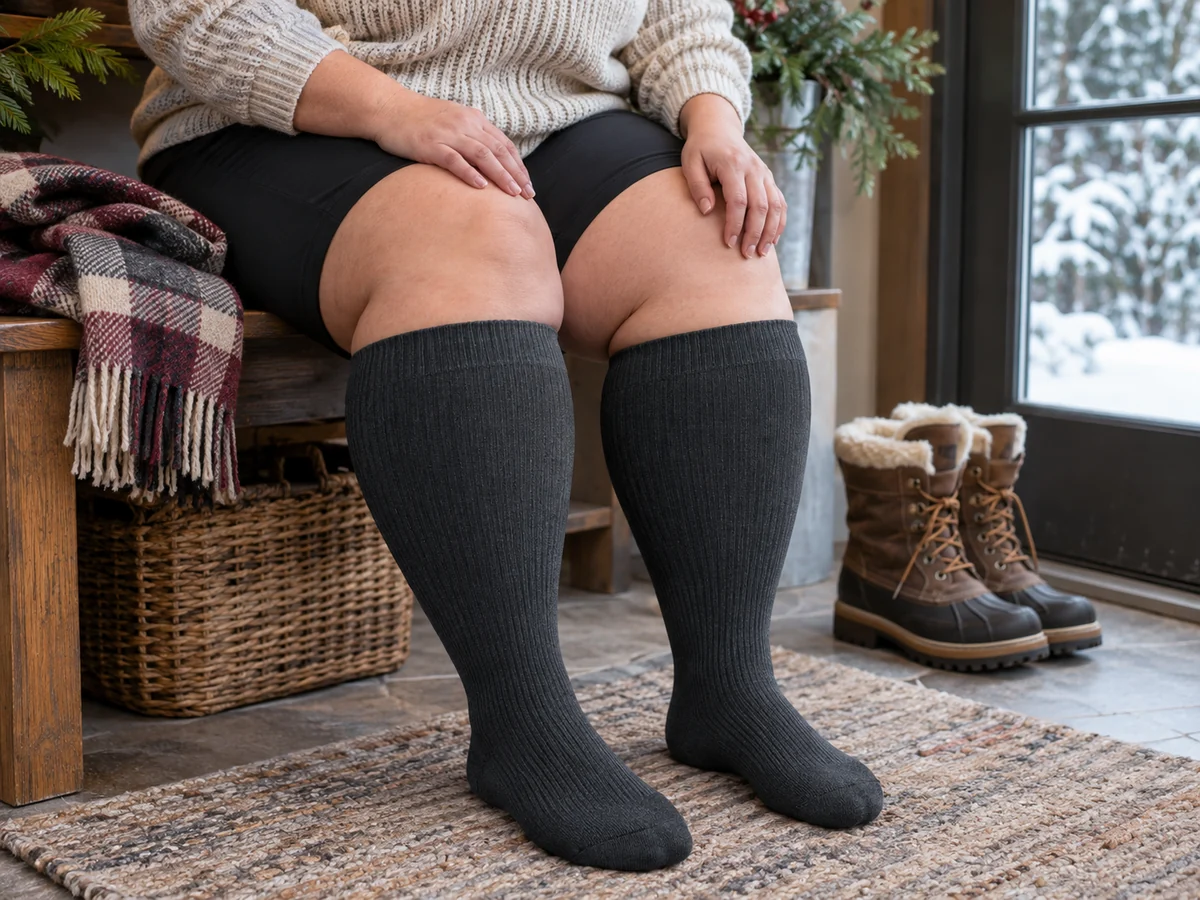
Provide buyers with specifications, care instructions and photography showing the product on genuinely wide calves.
- Core winter colors.
- Material evidence.
- Wide-calf model photography.
- Clear washing guidance.
Buyer questions
Frequently Asked Questions
Can wool be used in compression socks?
Yes, usually as part of a controlled blend, but elasticity, pressure, care and durability must be verified in the finished product.
Do thermal socks need larger shoes?
That depends on bulk and footwear. The development process should include shoe-fit trials rather than assuming compatibility.
Can thermal compression socks have cushioning?
Yes, targeted cushioning is possible if it does not disrupt fit, pressure performance or shoe space.