Direct answer
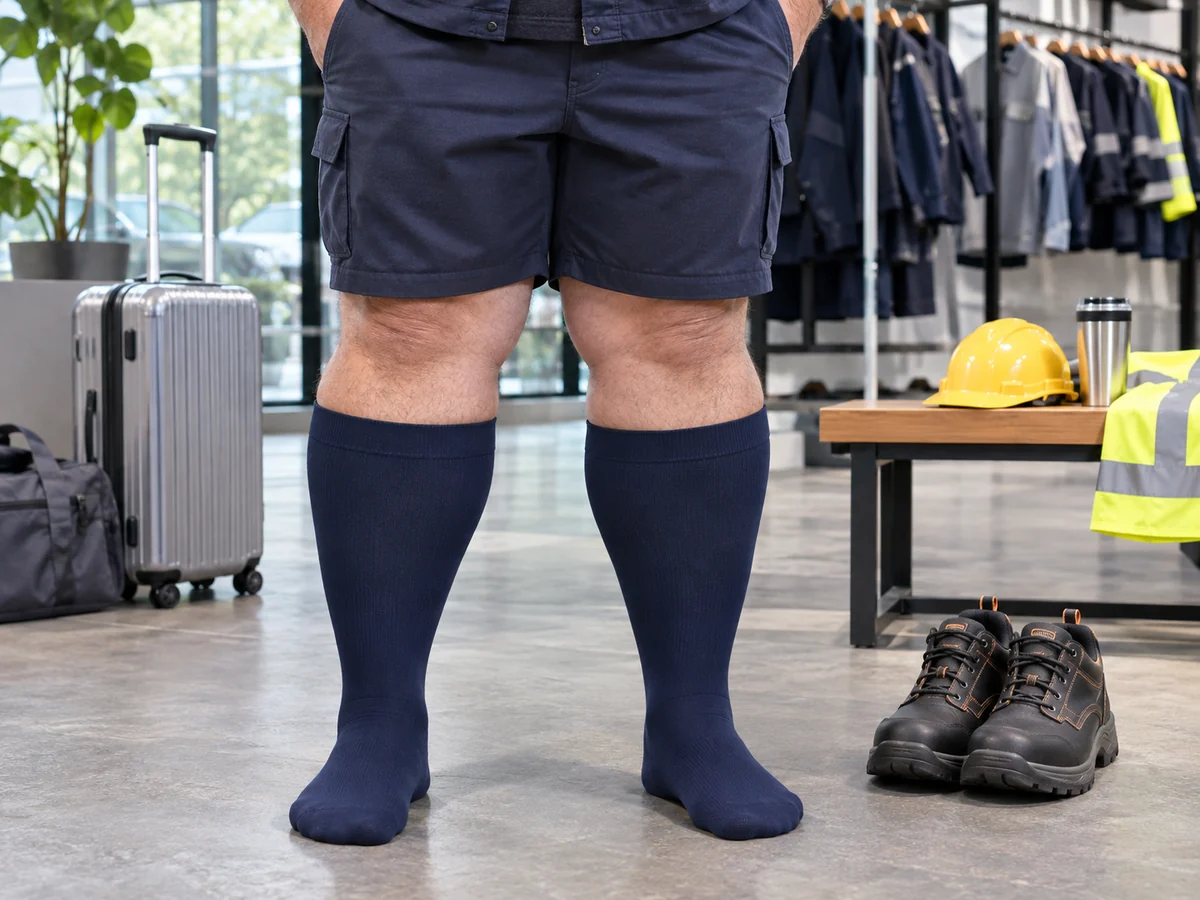
A men's extra wide calf compression sock wholesale range should be based on target ankle, calf, foot and leg-length data. Commercial assortments often begin with black, navy and charcoal, but fit and verified pressure matter more than gender labels. Buyers should test larger foot sizes independently, control cuff circumference and package the product with exact body measurements and pressure information.
Key Takeaways
- Build from men's foot and leg data, not labels alone.
- Grade foot length independently from calf width.
- Launch with focused commercial colors and sizes.
- Use exact measurements on packaging and listings.
Define the target men's fit
Men's assortments may require longer foot lengths, broader forefeet or taller leg options, but these needs vary by market. Use customer and retailer data instead of assuming one male shape.
Map ankle, calf and foot combinations to identify where a unisex chart creates gaps. Keep calf width independent so a large shoe size does not automatically mean an extra-wide leg.
- Target shoe and foot-length range.
- Ankle and calf measurement bands.
- Short, regular and tall demand.
- Instep and forefoot requirements.
Plan the opening wholesale assortment
Start with proven core colors and a manageable pressure and size architecture. Too many near-identical SKUs can dilute inventory before fit is validated.
Different channels may need different packaging: pharmacy shelves require clear measurement guidance, while workwear and travel sellers may prioritize use-case navigation.
- Black, navy and charcoal core colors.
- Focused size and length combinations.
- Closed-toe or open-toe options based on channel demand.
- Multipacks only after size performance is established.
Approve fit and appearance across sizes
Test the longest feet and widest calves, not only the center size. Confirm heel placement, toe comfort, ankle contour and cuff position after a full wear period.
Logos and patterns can widen significantly on larger calves. Review artwork worn and keep critical marks away from high-distortion zones.
- Full-size-set wearer trials.
- Pressure verification by size.
- Artwork checks at maximum stretch.
- Wash and abrasion testing.
Support retail conversion and repeat orders
Use body measurements before shoe size in product selection. Photos should show realistic wide calves and the exact cuff height. Clear information reduces the belief that one XXL label fits every leg.
Track sales and returns by size, length and reason. Use that evidence to refine the second production run rather than adding colors first.
- Measurement-first packaging.
- Realistic worn product photography.
- Consistent SKU and carton labels.
- Structured return-reason reporting.
Buyer questions
Frequently Asked Questions
Are men's and unisex wide calf compression socks the same?
They can share a construction, but the chart should be based on target foot, ankle, calf and length data rather than a label.
Which colors work for a men's wholesale launch?
Black, navy and charcoal are common core choices, with additional colors selected for the target channel and order volume.
Should shoe size select a men's compression sock?
Shoe size alone is insufficient. Ankle, calf and leg length are important for wide-calf fit and pressure performance.