Direct answer
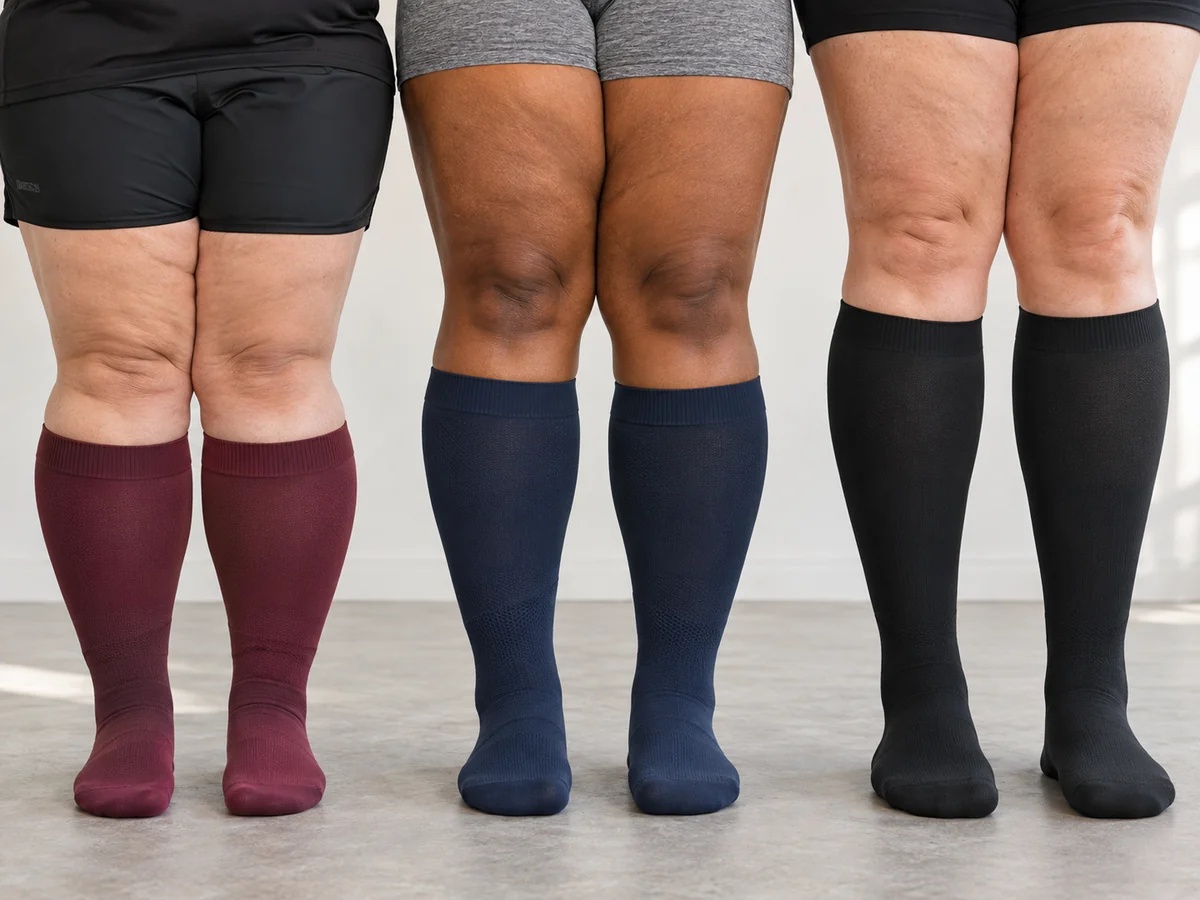
Short, regular and tall wide calf compression socks should be developed from heel-to-knee or floor-to-knee measurements, not from calf circumference alone. Each length needs its own finished height, shaping and pressure verification. Independent length options help prevent cuffs finishing behind the knee, fabric bunching at the ankle and socks sitting too low on taller wearers.
Key Takeaways
- Measure vertical leg length separately from circumference.
- Build unique height specifications for each option.
- Check cuff placement and ankle bunching on wearers.
- Verify pressure for every length and size combination.
Treat leg length as an independent dimension
Two people with the same calf circumference can have very different lower-leg lengths. If the sock is too long, the wearer may fold the cuff or allow fabric to bunch; if it is too short, the top band may sit at the widest part of the calf.
Collect vertical measurements with ankle and calf data. Use the intended cuff position just below the knee as the reference.
- Heel-to-cuff or floor-to-knee measurement.
- Widest-calf height from the floor.
- Intended top-band position.
- Foot and heel dimensions.
Develop length-specific patterns
Simply adding or removing courses can shift the pressure transition and calf shaping. Adjust where the sock widens and narrows so the anatomy aligns with the target leg.
Keep size and length codes distinct. A short extra-wide product is not the same pattern as a regular extra-wide product with the cuff folded down.
- Reposition calf shaping by length.
- Maintain heel and ankle alignment.
- Control finished height after boarding.
- Use unique SKU and packaging codes.
Validate movement and cuff position
Wear testing should include sitting, walking and knee bending. Check whether the cuff reaches the knee crease, slips below the intended position or causes fabric to collect at the ankle.
Test wearers near the upper calf limit in each length because greater circumference can reduce apparent vertical height when the knit stretches outward.
- Photograph standing and seated fit.
- Measure height after several hours of wear.
- Check wrinkles and cuff rolling.
- Repeat after laundering.
Present length choices clearly
The size chart should separate circumference and length decisions. A simple two-step process helps customers identify a width size and then select short, regular or tall.
Use consistent terminology on packaging, marketplaces and wholesale sheets. Include a diagram showing where vertical length is measured.
- Publish exact length ranges.
- Use diagrams rather than labels alone.
- Explain how stretch can affect worn height.
- Track returns by width and length combination.
Buyer questions
Frequently Asked Questions
Does a wider calf make a compression sock wear shorter?
It can, because the knit expands outward. Length must be validated at the intended circumference rather than measured only on a relaxed sock.
Can a long compression sock be folded at the cuff?
Folding can concentrate pressure and is generally not a substitute for correct length. Product instructions and qualified guidance should be followed.
How many length options should an OEM range offer?
Use customer measurement data and order volume. Short and regular may solve most needs in one market, while another may justify a tall option.