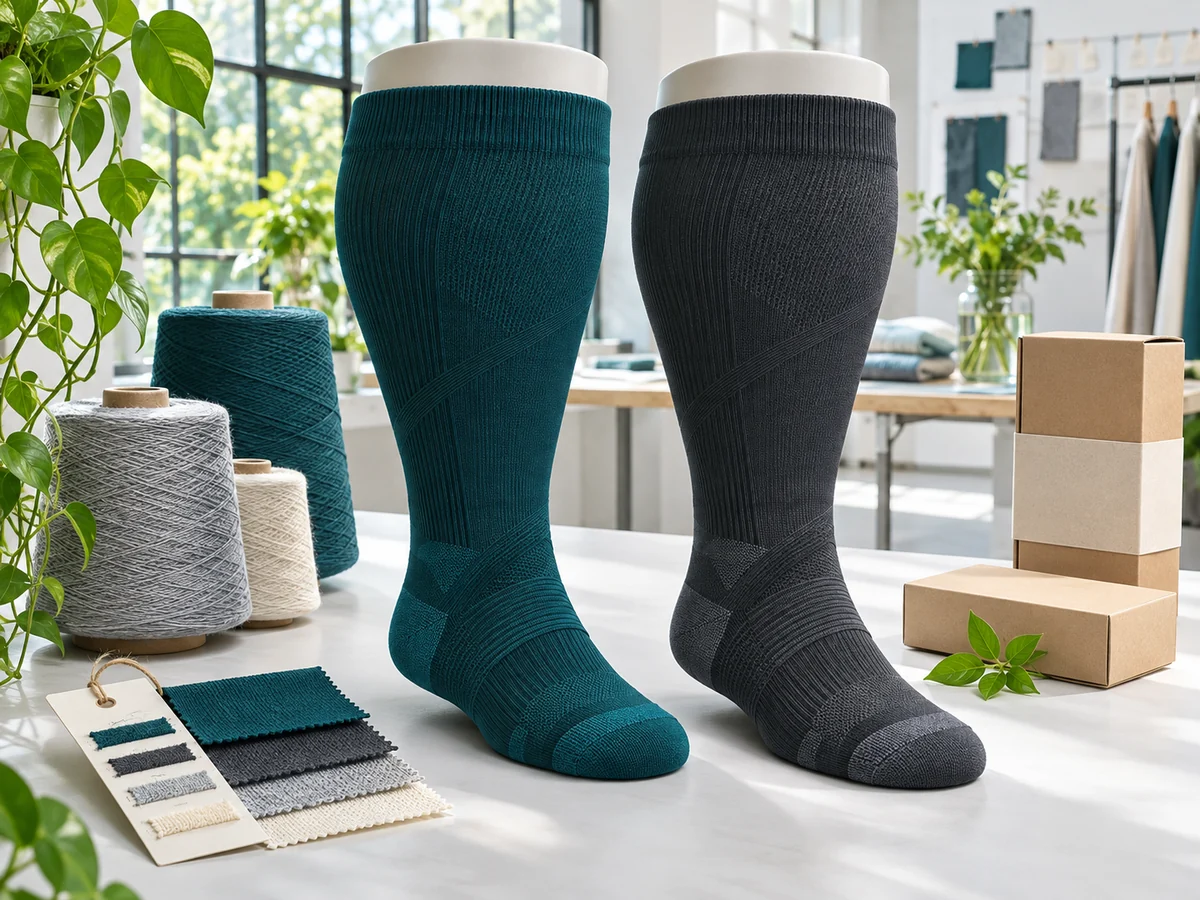
Direct answer
A more sustainable wide-calf compression sock program starts with traceable materials and durable construction, then verifies that recycled or lower-impact choices still meet fit, pressure, wash and quality requirements.
Key Takeaways
- Trace claims to material evidence.
- Durability is part of sustainability.
- Retest pressure after material changes.
- Reduce packaging without losing fit information.
Start with traceable material choices
Recycled polyamide or polyester, certified cellulosic fibers and responsibly sourced wool can support different product strategies. Ask for transaction certificates or equivalent evidence where a certification is claimed.
Document the percentage and location of the preferred material instead of describing the whole sock with a vague eco label.
- Material source.
- Certified content percentage.
- Supplier documentation.
- Chain-of-custody records.
Protect fit and compression performance
Preferred materials still need to perform. Recycled or alternative yarns may have different stretch, recovery, dye and abrasion behavior from the original construction.
Run full pressure, measurement and wear checks before approving the change across all wide-calf sizes.
- Pressure profile.
- Stretch recovery.
- Abrasion and pilling.
- Colorfastness.
Design for useful life
A sock that loses shape quickly creates replacement demand and customer dissatisfaction. Reinforcement, repair-resistant construction and clear care instructions can extend practical use.
Assess durability after repeated washing, not only on a new sample.
- Heel and toe reinforcement.
- Cuff recovery.
- Wash durability.
- Accurate care guidance.
Communicate without greenwashing
Use precise statements such as the verified recycled content of a named yarn. Avoid broad environmental superiority claims unless supported by a suitable comparative method.
Packaging can use less material while still carrying the calf chart, care, composition and traceability information buyers need.
- Specific claim wording.
- Evidence file.
- Reduced packaging volume.
- No loss of sizing clarity.
Buyer questions
Frequently Asked Questions
Can compression socks use recycled yarn?
Yes, but the finished product must still pass fit, pressure, durability, color and wash requirements.
Is bamboo always a sustainable choice?
The answer depends on fiber source, processing, durability and evidence. A fiber name alone is not enough for a broad environmental claim.
What is the most useful sustainability claim?
A specific, documented statement about material content, certification, packaging reduction or measured durability is more credible than a vague eco-friendly label.