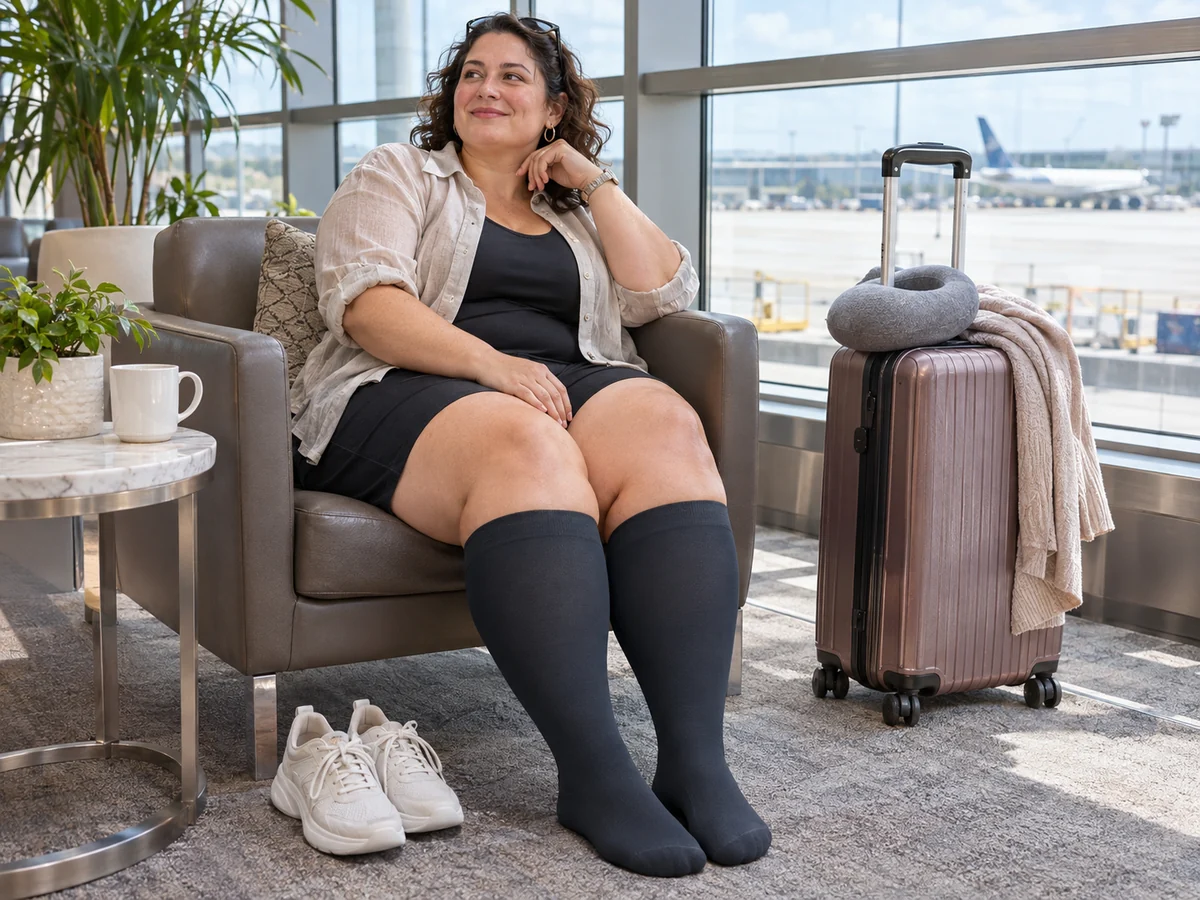
Direct answer
A strong plus-size travel compression sock program combines verified graduated pressure with generous calf grading, easy donning, breathable yarns and clear measurement-led sizing.
Key Takeaways
- Grade calf circumference separately from foot length.
- Test comfort in seated and walking wear trials.
- State verified pressure and sizing clearly on the pack.
- Use travel messaging without unsupported medical claims.
Start with the traveler, not a generic XXL label
Travel ranges often fail when a standard knee-high is simply enlarged. A larger foot does not always mean a proportionally larger calf, so foot size, ankle, calf circumference and sock height need their own specifications.
Build the size chart from target-user measurements and publish the practical calf range for every size. This gives buyers and end customers a more useful selection tool than a single plus-size label.
- Foot length and width.
- Ankle and calf circumference.
- Finished sock height.
- Top-opening stretch range.
Balance support with practical donning
A travel sock must be possible to put on correctly before a journey. Prototype evaluation should include donning, cuff placement, toe comfort and removal, not only a pressure result on a laboratory form.
Use clear illustrated instructions and consider assistive donning guidance for firmer products. Pressure claims should match test records for each approved size.
- Donning trials on target calf ranges.
- Smooth toe and heel placement.
- No folding at the top band.
- Repeat testing after laundering.
Choose materials for long wear
Breathable structures, moisture management and a smooth interior can improve comfort during extended sitting and walking. Reinforced heel and toe zones help products withstand repeated use with travel footwear.
Ask the factory to document yarn composition, colorfastness, dimensional stability and stretch recovery before bulk approval.
- Moisture-managing yarn options.
- Ventilation zones where construction permits.
- Durable heel and toe.
- Wash-tested stretch recovery.
Package the range for confident selection
The front of the pack should identify the product as wide-calf or plus-size, while the back explains how to measure. Pressure level, size range, fiber content, care and origin information should be easy to find.
For private label, approve all claims against technical evidence and the rules of the target market before printing.
- Measurement-led size chart.
- Verified pressure statement.
- Care and fiber information.
- QR link to fitting guidance.
Buyer questions
Frequently Asked Questions
Are flight socks and compression socks the same?
The terms are sometimes used together, but product construction and verified pressure can differ. Buyers should compare the actual specification rather than rely on the name.
What makes a travel sock suitable for wide calves?
A stated calf-circumference range, proportioned leg construction, stable pressure and practical wear testing are more meaningful than an XXL label alone.
Can travel compression socks be custom branded?
Yes. Colors, logos, packaging and size systems can be customized after the fit and pressure specification is validated.